|
APPENDIX N
Sample Plan and
This Disclosure Statement and Plan of Reorganization were the culmination of the 1999 Chapter 11 reorganization of Stuart Entertainment, Inc., a leading manufacturer and distributor of bingo and bingo-related gaming supplies. The reorganization was pre-negotiated with a majority of Stuart's debt holders before the petition was filed, and was structured around a "conversion" of Stuart's $100 million of unsecured bonds into all the equity of the reorganized company. Old equity was cancelled, and the holders of old common shares received a small cash distribution under the Plan. While the Plan provided that general unsecured claims received 25¢ on the dollar on account of their claims, most general unsecured creditors were trade vendors and suppliers, who had already been paid in full in accordance with an order issued by the Delaware bankruptcy court at the beginning of the case. This version of the Disclosure Statement has been edited and excerpted for publication purposes. |
|
Executive Guide to Corporate Bankruptcy | ||
|
| ||
|
IN THE UNITED STATES BANKRUPTCY COURT
DISCLOSURE STATEMENT IN SUPPORT OF FIRST AMENDED PLAN OF REORGANIZATION | ||
| | ||
|
|
|
Sample Plan and Disclosure Statement _ Debt to Equity Conversion |
|
|
|
Executive Guide to Corporate Bankruptcy | ||||
|
| ||||
|
| ||||
|
| |
|
Sample Plan and Disclosure Statement _ Debt to Equity Conversion | |
|
| |
|
Executive Guide to Corporate Bankruptcy | |
|
| |
|
QUESTIONS AND ANSWERS ABOUT THE STUART REORGANIZATION Q: Why is Stuart reorganizing? A: Over the past several years Stuart has incurred significant indebtedness in connection with the operation of its business, as well as increased competition in its industry. As a result, Stuart has no ability to service or otherwise satisfy its existing obligations to its Noteholders. Stuart believes that the restructuring contemplated by the attached Plan will enable its Creditors to recover more than if Stuart were to seek other restructuring alternatives or a liquidation under Chapter 7 of the Bankruptcy Code. Q: What is a Chapter 11 proceeding? A: Chapter 11 is the principal reorganization chapter of the United States Bankruptcy Code. Under Chapter 11, a debtor such as Stuart may reorganize its business for the benefit of itself and its creditors and shareholders. Bankruptcy Court confirmation of a plan of reorganization is the principal objective of a Chapter 11 case. Q: How are parties that have a relationship with Stuart treated in a Chapter 11 proceeding? A: It depends on what sort of claim you have against Stuart and how that claim is classified under the Plan of Reorganization. In general, the Chapter 11 Plan divides claims and equity interests that individuals and entities have against Stuart into separate classes. The Plan specifies the property of Stuart that each class is to receive and contains other provisions necessary to the reorganization of Stuart. Depending on how your claim is classified, and assuming you have an allowed claim, you may receive cash, equity securities in Stuart, the preservation of your relationship with Stuart, or nothing at all. You should review this Disclosure Statement to more fully understand what your rights are under the Plan. Q: What is the process for approving Stuart's Chapter 11 reorganization? A: Generally under the Bankruptcy Code, every class of claims that is | |
|
|
|
Sample Plan and Disclosure Statement _ Debt to Equity Conversion |
|
"impaired" under the Plan must vote in favor of the Plan in order for it to be confirmed by the Bankruptcy Court. A class of claims in impaired if claims in that class are paid less than the full value of the claims under the Plan. Holders of claims constituting at least two-thirds in dollar amount and more than one-half in number of allowed claims within each class must vote to accept the Plan for that class to be deemed to have accepted the Plan. Holders of at least two-thirds in the amount of allowed equity interests in each impaired class of equity interests must vote to accept the Plan in order for that class to be deemed to have accepted the Plan. If a class of claims will be paid in full under the Plan, or reinstated, or their legal, equitable and contractual rights are to remain unchanged by the reorganization, such classes will be deemed to be unimpaired and to have accepted the Plan. Accordingly, holders of such claims will not be entitled to vote on the Plan. Q: Can the Plan be approved if one or more of the impaired classes doesn't receive the requisite vote to accept the Plan? A: Yes. Chapter 11 of the Bankruptcy Code permits a plan of reorganization to be confirmed if at least one class of impaired claims vote in favor of the plan. However, if not all impaired classes vote to accept the plan, the Bankruptcy Court must find that the plan meets a number of statutory tests before it may confirm, or approve, the plan. Many of these tests are designed to protect the interests of holders of claims or equity interests who do not vote to accept the plan but who will nonetheless be bound by its provisions if confirmed by the Bankruptcy Court. Q: What do I, as a holder of a claim against Stuart, need to do to ensure that I have an Allowed Claim under the Plan? A: You should read carefully this Disclosure Statement and ensure that you follow the instructions contained in it for asserting your claim and that you meet the appropriate deadlines. You also should ensure that you vote timely on the Plan by promptly returning your Ballot. You may wish to consult legal counsel with respect to your rights. Q: As a current holder of Stuart common stock, what will I receive if the Plan is confirmed by the Bankruptcy Court? A: If the Plan is confirmed by the Bankruptcy Court, you will receive a pro rata share of $150,000 and nothing else. For example, if you own ten percent (10%) of the outstanding shares of Common Stock of Stuart on the applicable voting record date, you would be entitled to ten percent (10%) of the $150,000, or $15,000. This also |
|
Executive Guide to Corporate Bankruptcy | |
|
| |
|
means that, following confirmation of the Plan, you will no longer be a shareholder of Stuart and will have no other rights against Stuart. Q: As a current holder of 12-1/2% Senior Subordinated Notes due 2004 (the "Notes") of Stuart, what will I receive if the Plan is approved by the Bankruptcy Court? A: If the Plan is confirmed by the Bankruptcy Court, Stuart will issue one hundred percent (100%) of the shares of its New Common Stock to holders of the Notes. Accordingly, subject to the discussion below, you will receive your pro rata share of the New Common Stock issued by Stuart. For example, if you own ten percent (10%) of the Notes, you will be entitled to receive ten percent (10%) of the shares of New Common Stock then issued by Stuart. Q: Is the percentage of New Common Stock that I receive under the Plan subject to decrease in any way? A: Yes. The Plan contemplates that the executive management of Stuart will receive options to purchase New Common Stock upon confirmation of the Plan. If exercised, these options (which are referred to under the Plan as the Executive Options and the Equity Incentive Options) will result in the issuance of additional shares of New Common Stock, which will result in a decrease in the percentage of shares of New Common Stock held by you. This concept is commonly referred to as dilution. Q: As a holder of Notes, may I elect to receive cash in lieu of shares of New Common Stock? A: Yes. You may elect to receive cash in lieu of shares of New Common Stock by selecting the appropriate box on your Ballot. By making such an election, you will be entitled to receive a cash payment equal to twenty five percent (25%) of your Allowed Claim based on your ownership of Notes. For example, if you have an Allowed Notes Claim of $800,000 and you elect on your Ballot to receive cash, you would be entitled to receive $200,000 in cash in full satisfaction of your Claim. Q: What do I need to do now? A: If you are the holder of a Claim or Equity Interest in Classes 3A, 4, 5, 6, or 7, you should review this Disclosure Statement and the Plan, and fill out a Ballot to accept or reject the Plan. All Ballots must be actually received by the Voting Agent, Arthur Andersen LLP, Attn: Josh Skevington, P.O. Box 60725, Phoenix, Arizona 85082, Tel. (602) 286-1841, Fax (602) 286-2199, by 4:00 p.m., | |
|
|
|
Sample Plan and Disclosure Statement _ Debt to Equity Conversion |
|
Eastern time, on November 26, 1999, unless the Bankruptcy Court extends that deadline. If you are the holder of a Claim in Classes 1, 2, or 3, your Class is unimpaired and is therefore deemed to have accepted the Plan. Accordingly, you are not entitled to vote. Q: When is Stuart expected to complete its reorganization? A: A hearing before the Bankruptcy Court to consider confirmation of the Plan is currently set for December 14, 1999. Assuming that hearing occurs as scheduled, and is completed as Stuart intends and anticipates, the Plan will become effective, and Stuart's reorganization will be complete, by December 31, 1999. Q: Who should I contact if I have questions concerning the plan? A: If you have additional questions concerning the Plan, please contact:
Craig D. Hansen Thomas J. Salerno Jordan A. Kroop SQUIRE, SANDERS & DEMPSEY L.L.P. 40 North Central Avenue, Suite 2700 Phoenix, Arizona 85004 Telephone: (602) 528-4000 Facsimile: (602) 253-8129 |
|
Executive Guide to Corporate Bankruptcy | |
|
| |
|
INTRODUCTION AND SUMMARY Overview On August 13, 1999, STUART ENTERTAINMENT, INC., a Delaware corporation ("Stuart"), filed its petition for relief under Chapter 11 of Title 11 of the United States Code (the "Bankruptcy Code") with the United States Bankruptcy Court for the District of Delaware (the "Bankruptcy Court"). That same day, Stuart filed with the Bankruptcy Court its Plan of Reorganization. On August 23, 1999, Stuart filed a Disclosure Statement with respect to the August 13, 1999 Plan of Reorganization. On October 11, 1999, Stuart filed its First Amended Plan of Reorganization (the "Plan") and this Disclosure Statement. With this Disclosure Statement, Stuart has filed with the Bankruptcy Court the First Amended Supplement to the Plan of Reorganization (the "Plan Supplement"), which contains, among other things, certain documentation necessary to implement the Plan. For purposes of this Disclosure Statement, the Plan and the Plan Supplement will be collectively referred to as the Plan, unless otherwise noted. The purpose of this Disclosure Statement is to provide Stuart's Creditors and holders of Equity Interests with adequate information to make an informed judgment about the Plan. This information includes, among other matters, a brief history of Stuart, a summary of its Chapter 11 Case, a description of Stuart's assets and liabilities, a description of the terms under which Stuart's business will be reorganized and restructured in accordance with the Plan, and an explanation of how the Plan will function. It is important that Creditors and holders of Equity Interests read and carefully consider this Disclosure Statement and the Plan, and that such Creditors and holders of Equity Interests vote promptly on the acceptance of the Plan. Stuart's current capital structure is over-leveraged and, as a result, Stuart has no ability to service or otherwise satisfy its obligations to holders of the 12½% Senior Subordinated Notes due November 15, 2004 (the "Notes"). Stuart believes that the restructuring contemplated by the Plan will yield a recovery to Creditors greater than the return that could be achieved through other restructuring alternatives or a liquidation under Chapter 7 of the Bankruptcy Code. YOU SHOULD READ THIS DISCLOSURE STATEMENT IN ITS ENTIRETY BEFORE VOTING ON THE PLAN. THIS DISCLOSURE STATEMENT SUMMARIZES CERTAIN TERMS OF THE PLAN, BUT THE PLAN ITSELF IS THE GOVERNING DOCUMENT. IF ANY INCONSISTENCY EXISTS BETWEEN THE PLAN AND THE DISCLOSURE STATEMENT, THE TERMS OF THE PLAN CONTROL. If you have any questions concerning the procedures for voting, please contact Donald E. Tanguilig, Squire, Sanders & Dempsey L.L.P., Two Renaissance Square, 40 North Central Avenue, Suite 2700, Phoe | |
|
| |
|
Sample Plan and Disclosure Statement _ Debt to Equity Conversion | |
|
nix, Arizona 85004, telephone number (602) 528-4000, facsimile number (602) 253-8129. If you have questions concerning your treatment under the Plan, please contact legal counsel to Stuart, Craig D. Hansen and Jordan A. Kroop, Squire, Sanders & Dempsey L.L.P., Two Renaissance Square, 40 North Central Avenue, Suite 2700, Phoenix, Arizona 85004, telephone number (602) 528-4000, facsimile number (602) 253-8129. A SUMMARY DESCRIPTION OF THE CLASSIFICATION OF YOUR CLAIM OR EQUITY INTEREST AND THE TREATMENT PROPOSED UNDER THE PLAN ARE CONTAINED IN "OVERVIEW OF THE PLAN _ Treatment of Claims and Equity Interests Under the Plan" BELOW. EXHIBIT 1 TO THIS DISCLOSURE STATEMENT IS A COMPLETE COPY OF THE PLAN. Stuart reserves the right to amend, modify, or supplement the Plan at any time before the confirmation of the Plan, provided that such amendments or modifications do not materially alter the treatment of, or distributions to, Creditors and holders of Equity Interests under the Plan. SECURITIES ARE TO BE ISSUED BY REORGANIZED STUART IN ACCORDANCE WITH THE PLAN. STUART BELIEVES THAT SUCH SECURITIES ARE BEING OFFERED AND ISSUED UNDER EXEMPTIONS PROVIDED IN SECTION 1145 OF THE BANKRUPTCY CODE AND CERTAIN RULES AND REGULATIONS PROMULGATED UNDER THAT SECTION. WHILE THESE SECURITIES MAY BE TRANSFERRED AND RESOLD WITHOUT REGISTRATION UNDER THE UNITED STATES SECURITIES ACT OF 1933, AS AMENDED, THE PLAN MAY IMPOSE CERTAIN RESTRICTIONS ON THE TRANSFERABILITY OF SUCH SECURITIES. THE SECURITIES AND EXCHANGE COMMISSION HAS NOT TAKEN A POSITION WITH RESPECT TO THE SECURITIES TO BE ISSUED IN ACCORDANCE WITH THE PLAN. THE FINANCIAL PROJECTIONS CONTAINED IN THIS DISCLOSURE STATEMENT REPRESENT STUART'S ESTIMATES OF FUTURE EVENTS BASED ON CERTAIN ASSUMPTIONS MORE FULLY DESCRIBED BELOW, SOME OR ALL OF WHICH MAY NOT BE REALIZED. NONE OF THE FINANCIAL ANALYSES CONTAINED IN THIS DISCLOSURE STATEMENT IS CONSIDERED TO BE A "FORECAST" OR "PROJECTION" AS TECHNICALLY DEFINED BY THE AMERICAN INSTITUTE OF CERTIFIED PUBLIC ACCOUNTANTS. THE USE OF THE WORDS "FORECAST," "PROJECT," OR "PROJECTION" WITHIN THIS DISCLOSURE STATEMENT RELATE TO THE BROAD EXPECTATIONS OF FUTURE EVENTS OR MARKET CONDITIONS AND QUANTIFICATIONS OF THE POTENTIAL RESULTS OF OPERATIONS UNDER THOSE CONDITIONS. | |
|
Executive Guide to Corporate Bankruptcy | |
|
| |
|
ALL FINANCIAL INFORMATION PRESENTED IN THIS DISCLOSURE STATEMENT WAS PREPARED BY STUART. reference IS MADE TO EXHIBIT 2 OF THE DISCLOSURE STATEMENT, WHICH IS STUART'S ANNUAL REPORT ON FORM 10-K FOR THE FISCAL YEAR ENDED DECEMBER 31, 1998, AS AMENDED ("FORM 10-K/A"). REFERENCE IS ALSO MADE TO STUART'S QUARTERLY REPORT ON FORM 10-Q FOR QUARTERLY PERIOD ENDED JUNE 30, 1999 ("FORM 10-Q"), LOCATED AT EXHIBIT 3. EACH CREDITOR AND EQUITY INTEREST HOLDER IS URGED TO REVIEW THE PLAN IN FULL BEFORE VOTING ON THE PLAN TO ENSURE A COMPLETE UNDERSTANDING OF THE PLAN AND THIS DISCLOSURE STATEMENT. Certain statements, projections of future operating results, valuation estimates and the like contained in this Disclosure Statement and elsewhere are statements that Stuart believes constitute "forward-looking statements" within the meaning of the Private Securities Litigation Reform Act of 1995. Such forward-looking statements involve known and unknown risks, uncertainties and other important factors that could cause the actual results, performance or achievements of Reorganized Stuart, or industry results, to differ materially from any future results, performance or achievements expressed or implied by such forward-looking statements. Such risks, uncertainties and other important factors include, among others: general economic and business conditions; competition; loss of any significant customers; changes in business strategy or development plans; availability, terms and deployment of capital; adverse uninsured determinations in any existing or future litigation or regulatory proceedings and any other factors referenced in this Disclosure Statement or otherwise. See "RISK FACTORS." These forward-looking statements speak only as of the date of this Disclosure Statement, and Stuart expressly disclaims any obligation or undertaking to disseminate any updates or revisions to any forward-looking statement contained in this Disclosure Statement to reflect any change in Stuart's or Reorganized Stuart's expectations with regard to such statements or any change in events, conditions or circumstances on which any such statement is based. THIS DISCLOSURE STATEMENT IS INTENDED FOR THE SOLE USE OF CREDITORS AND OTHER PARTIES IN INTEREST, AND FOR THE SOLE PURPOSE OF ASSISTING THEM IN MAKING AN INFORMED DECISION ABOUT THE PLAN. NO PERSON HAS BEEN AUTHORIZED TO GIVE ANY INFORMATION OR MAKE ANY REPRESENTATIONS IN CONJUNCTION WITH THE SOLICITATION OF VOTES TO ACCEPT OR REJECT THE PLAN OTHER THAN THE INFORMATION AND REPRESENTATIONS CONTAINED IN THIS DISCLOSURE STATEMENT OR IN THE BALLOTS. IF GIVEN OR MADE, ANY SUCH INFORMATION OR REPRESENTATIONS MUST | |
|
|
|
Sample Plan and Disclosure Statement _ Debt to Equity Conversion |
|
NOT BE RELIED UPON AS HAVING BEEN AUTHORIZED BY STUART. THIS DISCLOSURE STATEMENT HAS BEEN APPROVED BY THE BANKRUPTCY COURT AS CONTAINING ADEQUATE INFORMATION TO PERMIT A CREDITOR TO VOTE ON THE PLAN. CAPITALIZED TERMS USED BUT NOT DEFINED IN THIS DISCLOSURE STATEMENT HAVE THE DEFINITIONS GIVEN TO THEM IN THE PLAN. STUART STRONGLY URGES ACCEPTANCE OF THE PLAN, THE TERMS OF WHICH IT NEGOTIATED WITH CONTRARIAN CAPITAL MANAGEMENT, L.L.C., WHO ALSO STRONGLY URGES ACCEPTANCE OF THE PLAN. |
|
Executive Guide to Corporate Bankruptcy | |||
|
| |||
|
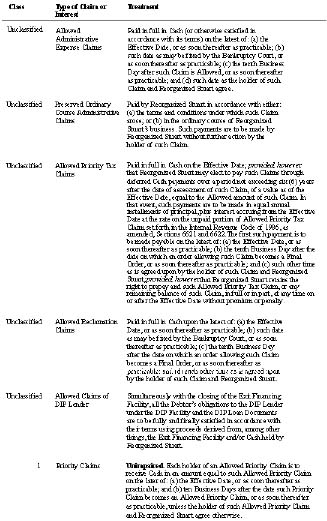
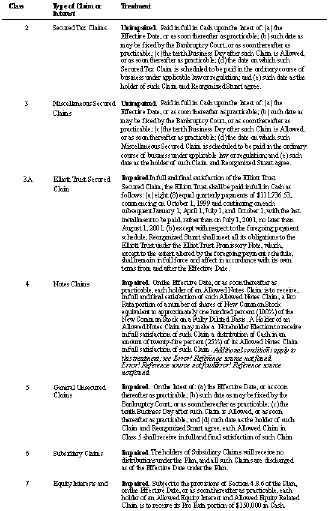
Summary of Classification and Treatment Under the Plan 1 As described more fully in this Disclosure Statement, the Plan enables a restructuring of Stuart's prepetition indebtedness and operations. Among other things, the Plan provides for the exchange of Notes for New Common Stock, provided that certain holders of Notes may elect to receive a cash distribution in lieu of New Common Stock. Holders of General Unsecured Claims, to the extent not otherwise previously satisfied, will receive in satisfaction of their Claims a cash payment equivalent to twenty-five percent (25%) of the value of their Allowed General Unsecured Claim. Holders of Old Common Stock, and other holders of Equity Interests and Equity Related Claims will receive a Pro Rata portion of $150,000 in Cash, subject to certain conditions. Set forth in the following section is a summary of the classification and treatment of Claims and Equity Interests under the Plan. The Plan divides the Claims of known Creditors and Equity Interests into Classes and sets forth the treatment afforded to each Class. The classification of Claims and the distributions to be made under such classification takes into account the relative priorities of Claims, Equity Interests, and Equity Related Claims. Stuart believes that it has classified all Claims, Equity Interests, and Equity Related Claims in compliance with the provisions of Section 1122 of the Bankruptcy Code. If the Plan is confirmed by the Bankruptcy Court, each holder of an Allowed Claim will receive the same treatment as all holders of other Allowed Claims in the same Class, regardless of whether a particular holder voted to accept the Plan. Moreover, upon confirmation, the Plan will be binding on all Creditors and Equity Interests regardless of whether such Creditors or Equity Interests voted to accept the Plan. The Plan creates various Classes of Claims against, and Equity Interests in, Stuart. The table below sets forth the specific classification and treatment under the Plan of each of the Classes. | |||
|
1 This summary contains only a brief and simplified description of the classification and treatment of Claims and Equity Interests under the Plan. This summary does not describe every provision of the Plan. Accordingly, you should refer to the entire Disclosure Statement (including exhibits), the Plan, and the Plan Supplement for a complete description of the classification and treatment of Claims and Equity Interests. | |||
|
| |
|
Sample Plan and Disclosure Statement _ Debt to Equity Conversion | |
|
|
|
Executive Guide to Corporate Bankruptcy | ||||
|
| ||||
|
| ||||
|
|
|
Sample Plan and Disclosure Statement _ Debt to Equity Conversion |
|
Voting and Confirmation Procedures This Disclosure Statement is accompanied by copies of the following: (a) the Plan, attached as Exhibit 1 to this Disclosure Statement; (b) an Order of the Bankruptcy Court approving this Disclosure Statement under Section 1125 of the Bankruptcy Code; (c) an Order of the Bankruptcy Court approving the forms of Ballots to be used for voting on the Plan, and approving the notice of, and fixing the time for, submitting Ballots and the Confirmation Hearing; and (d) a Ballot to accept or reject the Plan. The appropriate form of Ballots are to be used by holders of Claims and Equity Interests in Classes 3A, 4, 5, 6, and 7. Holders of Claims in Classes 1, 2, and 3 are unimpaired under the Plan and are deemed to have accepted the Plan without voting. With respect to holders of Notes and Equity Interests, Ballots are being furnished to record holders of such Notes and Equity Interests as of the Voting Record Date, with instructions requiring that all such record holders distribute Ballots to their respective beneficial holders, collect such beneficial holders' Ballots, and complete and submit a master Ballot summarizing the Ballots received from beneficial holders. Who May Vote. Under the Bankruptcy Code, impaired classes of Claims or Equity Interests are entitled to vote on a plan of reorganization. A Class that is not impaired under a plan is deemed to have accepted a Plan and does not vote. A Class is "impaired" under the Bankruptcy Code unless the legal, equitable, and contractual rights of the holders of Claims or Equity Interests in that Class are not modified or altered. For purposes of the Plan, holders of Claims and Equity Interests in Classes 3A, 4, 5, 6, and 7 are impaired and entitled to vote on the Plan. Voting Instructions. All votes to accept or reject the Plan must be cast by using the appropriate form of Ballot enclosed with this Disclosure Statement. No votes other than ones using such Ballots will be counted, except to the extent the Bankruptcy Court orders otherwise. The Bankruptcy Court has set October 27, 1999 as the Voting Record Date under the Plan. The Voting Record Date is the date for the determination of record holders of Claims entitled to receive a copy of this Disclosure Statement and vote, using appropriate Ballots, to accept or reject the Plan. All Ballots (including master Ballots for record holders of Notes and Equity Interests as described above) must be actually received by Arthur Andersen LLP, Attn: Josh Skevington, P.O. Box 60725, Phoenix, Arizona 85082, Tel. (602) 286-1841, Fax (602) 286-2199 (the "Voting Agent"), by 4:00 p.m., Eastern time, on November 26, 1999 (the "Voting Deadline"), unless the Bankruptcy Court extends such date before such time. |
|
Executive Guide to Corporate Bankruptcy | |
|
| |
|
For your vote to count, your Ballot must be properly completed according to the voting instructions on the Ballot and received no later than the Voting Deadline by the Voting Agent. Any Ballot not indicating an acceptance or rejection will be deemed an acceptance of the Plan. If you are a beneficial holder of a security held by a nominee or record holder, your Ballot must be returned to your nominee or record holder in time for the nominee or record holder to include a summary of your Ballot on the Master Ballot to be submitted to the Voting Agent by the Voting Deadline. For questions about voting procedures, the amount of your Claim, or the packet that you received, please contact:
Donald E. Tanguilig Squire, Sanders & Dempsey L.L.P. 40 North Central Avenue, Suite 2700 Phoenix, Arizona 85004 Telephone: (602) 528-4000 Facsimile: (602) 253-8129
If you have any questions concerning the restructuring or the Plan, please contact: Craig D. Hansen Thomas J. Salerno Jordan A. Kroop SQUIRE, SANDERS & DEMPSEY L.L.P. 40 North Central Avenue, Suite 2700 Phoenix, Arizona 85004 Telephone: (602) 528-4000 Facsimile: (602) 253-8129
Acceptance or Rejection of the Plan Under the Bankruptcy Code, a voting Class of Claims is deemed to have accepted the Plan if it is accepted by creditors in such Class who, of those voting on the Plan, hold at least two-thirds in amount and more than one-half in number of the Allowed Claims of such Class. A voting Class of Equity Interests is deemed to have accepted the Plan if it is accepted by holders of Equity Interests who hold at least two-thirds in amount of the Equity Interests of such Class that have actually voted on the Plan. If the Plan is not accepted by all impaired Classes of Allowed Claims, the Plan may still be confirmed by the Bankruptcy Court under Section 1129(b) of the Bankruptcy Code if: (a) the Plan has been accepted by | |
|
|
|
Sample Plan and Disclosure Statement _ Debt to Equity Conversion |
|
at least one impaired Class of Claims; and (b) the Bankruptcy Court determines, among other things, that the Plan "does not discriminate unfairly" and is "fair and equitable" with respect to each non-accepting impaired Class (the "Cramdown Provisions"). If the Plan is not accepted by all impaired Classes of Allowed Claims or Equity Interests, Stuart reserves the right to ask the Bankruptcy Court to confirm the Plan under the Cramdown Provisions. Confirmation Hearing, Objections Section 1128(a) of the Bankruptcy Code requires the Bankruptcy Court, after notice, to hold a Confirmation Hearing. Section 1128(b) of the Bankruptcy Code provides that any party-in-interest may object to Confirmation of the Plan. Under Section 1128 of the Bankruptcy Code and Rule 3017(c) of the Bankruptcy Rules, the Bankruptcy Court has scheduled the Confirmation Hearing before the Honorable Mary F. Walrath, United States Bankruptcy Judge, at the United States Bankruptcy Court, District of Delaware, 824 Market Street, 5th Floor, Wilmington, Delaware for December 14, 1999 at 2:00 p.m. A notice (the "Confirmation Hearing Notice") setting forth the time and date of the Confirmation Hearing has been included along with this Disclosure Statement. The Confirmation Hearing may be adjourned from time to time by the Bankruptcy Court without further notice, except for an announcement of such adjourned hearing date by the Bankruptcy Court in open court at such hearing. Any objection to Confirmation of the Plan must be in writing, must comply with the Bankruptcy Rules and the Local Rules of the Bankruptcy Court, and must be filed and served as required in the Confirmation Hearing Notice. |
|
Executive Guide to Corporate Bankruptcy | |
|
| |
|
BACKGROUND AND EVENTS PRECIPITATING
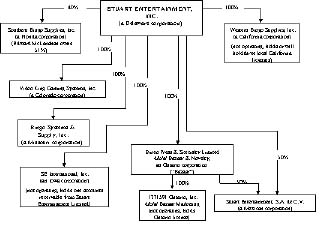
THE CHAPTER 11 FILING Stuart, formerly known as Bingo King Company, Inc. and currently doing business as Bingo King (in conjunction with several non-debtor subsidiaries), is a leading manufacturer of a full line of bingo and bingo-related products, including disposable bingo paper, pulltab tickets, ink dabbers, electronic bingo systems and related equipment and supplies. Stuart enjoys a broad reputation for innovation and new product development and has been a leader in the bingo industry for approximately 50 years, having helped to popularize many important breakthroughs in bingo, such as disposable bingo paper and electronic bingo systems. Bingo is one of North America's most popular forms of gaming and entertainment. Many nonprofit organizations sponsor bingo games for fundraising purposes, while commercial entities, Indian gaming enterprises, casinos and government sponsored entities operate bingo games for profit. Stuart sells or leases its products to this diverse group of end-users through more than 300 distributors, its direct sales force and Stuart-owned distribution outlets. Stuart believes that it derives a competitive advantage in the bingo industry by offering a wider array of bingo and bingo-related products than its competitors. Stuart supplies bingo halls with all the products and equipment necessary to operate a bingo game of any size, including bingo paper, fixed-base or hand-held electronic bingo systems, ink dabbers, pulltab tickets, bingo ball blowers, public address systems, television monitors, multi-media flashboards, computerized verification systems, tables, chairs, concession equipment, and party supplies. Stuart was reincorporated in Delaware in 1986, and is a successor, by merger effective as of January 21, 1987, to a business formed in 1948. Stuart's principal executive office is currently located at 3211 Nebraska Avenue, Council Bluffs, Iowa 51501. Its telephone number is (712) 323-1488. Relationship of Debtor With Its Subsidiaries Stuart is the operating parent company of a family of subsidiary companies, certain of which maintain ongoing operations relating either to certain areas of Stuart's business or certain geographical areas. Additionally, certain subsidiaries do not maintain ongoing operations, but rather hold various gaming licenses necessary to enable Stuart and its operating subsidiaries to maintain business operations in compliance with applicable law and gaming regulations. Stuart and its subsidiaries are organized as follows: | |
|
| |||
|
Sample Plan and Disclosure Statement _ Debt to Equity Conversion | |||
|
| |||
|
As reflected in the chart above, Stuart's significant operating subsidiaries are as follows: Video King Gaming Systems, Inc. Video King Gaming Systems, Inc., a wholly owned subsidiary of Stuart ("Video King"), was formed in 1992 to develop a line of electronic gaming equipment, primarily for Stuart's bingo markets. Video King began manufacturing and shipping selected products in 1993. Video King continues to focus its sales efforts within the Company's established bingo markets. The traditional domestic and international for profit gaming markets may be a future market, but Video King has no current plans for such markets. Stuart Entertainment, S.A. de C.V. Stuart Entertainment, S.A. de C.V., a Mexican corporation and a wholly owned subsidiary of Stuart ("Stuart Entertainment Mexico") was formed in 1991 by Stuart and Bingo Press & Specialty Limited for the purpose of printing and finishing bingo paper exclusively for their respective needs. During 1998, 1997 and 1996 all of the bingo paper manufactured by Stuart Entertainment Mexico was sold to Stuart. Bingo Press & Specialty Limited. Bingo Press & Specialty Limited, an Ontario, Canada corporation and a wholly owned subsidiary of Stuart ("Bazaar"), operates under the trade name Bazaar & Novelty and was acquired by Stuart in December 1994. Bazaar manufactures and distributes a complete line of bingo cards, pulltab tickets, ink dabbers, supplies and accessories in Canada. Bazaar's products are sold primarily to distributors, who | |||
|
Executive Guide to Corporate Bankruptcy | |
|
| |
|
resell them to fraternal, charitable, religious and social organizations, lodges, hospitals, nursing homes, PTA groups, legions, and other similar not-for-profit organizations that use such products to raise money and provide entertainment. To a lesser extent, Bazaar's products are sold to charitable and commercial bingo halls, governmental lottery agencies, and through Stuart-owned distribution outlets. Bingo Systems and Supply, Inc. Bingo Systems and Supply, Inc. ("Bingo Systems") became a wholly owned subsidiary of Stuart by virtue of an acquisition effective on November 1, 1998. Bingo Systems finishes bingo paper manufactured by Stuart and distributes bingo paper, ink dabbers, bingo equipment, pulltabs tickets, and other related products to fraternal, charitable, religious and social organizations, lodges, hospitals, nursing homes, PTA groups, legions, and other similar not-for-profit organizations that use such products to raise money and provide entertainment. Previous Acquisitions Acquisition of Bingo Systems & Supply, Inc. On November 1, 1998, Stuart completed the acquisition of all the outstanding capital stock of Bingo Systems for aggregate consideration of $2,200,000, consisting of $1,000,000 in cash and a $1,200,000 promissory note, made payable to the Elliott Trust and providing the basis for the Elliott Trust Secured Claim. Acquisition of Alberta Bingo Supply, Inc. On June 1, 1998, Bazaar purchased certain assets related to the bingo business formerly conducted by one of its distributors, Alberta Bingo Supply, Inc. ("ABS"). Under the terms of the agreement, Bazaar paid C$1,000,000 for the goodwill of the acquired business and C$410,000 for certain equipment and fixtures. Bazaar agreed to sell the ABS existing inventory relating to its bingo business, as an agent for ABS, for a period of six months ending December 1, 1998. Bazaar agreed to pay to ABS the difference between C$1,404,113 and the amount of such inventory (valued at cost) sold during the six-month period. As of December 31, 1998, Bazaar paid or has been credited C$1,354,113 for the inventory and has withheld C$50,000 pending a minor dispute concerning inventory valuation. Acquisition of Power Bingo Corp. On July 1, 1997, Stuart completed the acquisition of substantially all the assets of Power Bingo Corp., a market leader in hand-held electronic bingo units for a purchase price of $1.2 million, consisting of $1.1 million in cash and forgiveness of a note receivable plus future payments of approximately $2.7 million that was based on the market performance of the hand-held electronic bingo units. All payments have been made. Industry Overview Bingo Industry. The National Association of Fundraising Ticket Manufacturers' 1996 Charity Gaming in North America Report (the "NAFTM | |
|
|
|
Sample Plan and Disclosure Statement _ Debt to Equity Conversion |
|
Report") estimated that over 60,000 organizations have licenses to operate bingo games in the United States and Canada. According to industry reports compiled by the Bingo Bugle, which is a series of regional newspapers aimed at bingo players, bingo players visit bingo halls in the United States and Canada an estimated 1.2 billion times a year. Stuart believes that significant amounts are wagered on bingo in the United States and Canada, and that electronic bingo systems may be a positive factor in encouraging additional players to visit bingo halls. Over each of the last few years, more states have begun to permit electronic bingo and Stuart is finding increased player acceptance of electronic bingo systems as the products are introduced into different markets. Regulations governing traditional paper bingo and electronic bingo systems vary by jurisdiction. In the United States, traditional paper bingo is legal in all states except Arkansas, Hawaii, Tennessee and Utah. Electronic bingo systems are currently legal in 29 states in some form and in Indian gaming halls in compliance with the Indian Gaming Regulatory Act ("IGRA"). In Canada, traditional paper bingo is legal in all ten provinces and two territories. Fixed-base electronic bingo systems, however, may only be used in halls owned or authorized by the provincial governments. Currently, fixed-base electronic gaming systems are permitted only in British Columbia and Manitoba, while hand-held electronic bingo systems are legal only in Ontario and must be used in conjunction with bingo paper. The bingo industry in the United States is highly fragmented among numerous bingo game operators. The majority of bingo games in the United States are operated by small nonprofit organizations for fundraising purposes. Such organizations include religious, fraternal, social, military, and civic organizations. A smaller percentage of bingo games in the United States are operated for profit in large bingo halls by casinos, Indian gaming enterprises, and commercial operators. For example, Foxwoods Resort and Casino in Connecticut, the Seminole Indian Casino in Florida, the Potawatomi Bingo Casino in Wisconsin, and Win River Casino Bingo in California all feature large-scale modern bingo halls with seating capacities ranging in size from approximately 1,000 to 3,000 seats. In Canada, bingo is generally highly centralized under the administration of government-sponsored entities or licensed commercial operators, which own and operate large bingo halls, with average session attendance in excess of 175 players. These government sponsored entities and commercial operators run games on behalf of various charitable organizations, often playing several sessions per day. Satellite-linked bingo games have been introduced in recent years in the Canadian Provinces of Alberta, British Columbia, Quebec, and Ontario. The British Columbia, Quebec, and Ontario satellite bingo systems are government operated. These satellite-linked bingo games pool the prize money available among commercial bingo halls thus offering higher jack |
|
Executive Guide to Corporate Bankruptcy | |
|
| |
|
pots. Satellite-linked games have been approved in the state of Washington, but have not been introduced. Pulltab Industry. In the United States and Canada, pulltab tickets generally are sold at charitable bingo halls as an additional source of fundraising. In several states and the Province of Ontario, pulltab tickets are approved for sale in third party retail locations, including bars and taverns. Eleven states also use pulltab tickets, in addition to scratch-off tickets, in their instant lottery ticket sales. Stuart believes that significant amounts of money are wagered on pulltab tickets in the United States and Canada, and that these amounts may increase if additional jurisdictions permit the sale of pulltab tickets and if jurisdictions that currently permit the use of pulltab tickets expand the permitted point of sale locations to include third party retail locations. In the United States, pulltab tickets are currently legal (either through state lotteries or through other outlets) in approximately 40 states. Each state has developed specific regulations that affect the style of play in its market by regulating the point of sale, price per ticket, game themes and payouts. In Canada, seven provincial lotteries use pulltab tickets in their instant lottery ticket sales. Ontario allows the sale of pulltab tickets at charitable bingo halls and under charity license at third party retail locations such as bars, restaurants, concessionaires, gas stations, hotels, mall kiosks, supermarkets, convenience stores and bowling alleys. Currently there are approximately 9,500 such third party retail locations in Ontario. In November 1997, Stuart was awarded a five-year contract by the Ontario Gaming Control Commission ("OGC") to be the sole supplier of pulltab tickets to all charity licensed retail locations in the Province of Ontario (see "Government Regulations"). Stuart's position in Ontario, which is, according to the 1997 NAFTM Report, North America's largest charity marketplace, has been solidified with the five-year contract with possible extensions. In September 1997, the OGC announced the list of the final proponents for operation and ownership of the 44 charity gaming clubs that were to replace the system of roving Monte Carlo casinos. In 1998, the OGC withdrew its approval of such clubs and assumed ownership and operation of the five clubs then operating. The OGC also authorized the use of slot machines at seventeen racetracks in Ontario. Stuart is currently unable to anticipate whether the clubs or slot machines will have a material impact on the bingo and pulltab markets in Ontario. Competition The markets in which Stuart's products compete are extremely competitive. The principal competitive factors in the bingo paper and pulltab ticket markets are quality, service, and price. Stuart's major competitor in the bingo paper and pulltab markets is Arrow International. Stuart's elec | |
|
|
|
Sample Plan and Disclosure Statement _ Debt to Equity Conversion |
|
tronic bingo systems, System 12Ô and Power Bingo KingÔ, compete with a number of other manufacturers of electronic bingo systems, none of whom manufacture a full line of bingo and bingo-related products. Stuart also competes with other forms of entertainment such as lotteries, on-line gaming products and the continued expansion of the legalization by the United States, Canada, and other foreign jurisdictions of casino gaming. While there can be no assurances that Stuart will continue to remain competitive in these or other areas, Stuart believes that through its strong distribution network, manufacturing facilities, and technology it will be able to maintain its unique position as a manufacturer of a full line of both consumable and electronic bingo and bingo-related products. Stuart's Business Products Stuart offers a wide array of bingo and bingo-related products. Stuart is capable of supplying a bingo hall with all the products and equipment necessary to operate a bingo game of any size, including bingo paper, fixed-base or hand-held electronic bingo systems, ink dabbers, pulltab tickets, bingo ball blowers, public address systems, television monitors, multi-media flashboards, computerized verification systems, tables, chairs, concession equipment and party supplies. Stuart is organized on a global product line basis under three reportable segments. Consumable Bingo Products Bingo Paper. Stuart sells a complete line of bingo paper, which is generally sold in booklet form and is available in a variety of sizes, styles and colors, Stuart's bingo paper line includes a number of specialty bingo games under proprietary trademarks or licenses such as Bonanza Bingo®, Bonus Line®, Double Action, Wildcard Bingo, Triangle Bingo, three styles of 90-number bingo games and other specialty bingo games that can be played as variations on or concurrently with the standard 75-number bingo game. Stuart also sells a line of disposable cards designed for play on tour buses, cruise ships and other environments with limited space for play. Stuart's bingo card configurations are developed in-house by a mathematician using sophisticated algorithmic models, which are validated through computer simulation in which in excess of 1,000,000 simulated games are played on a given pattern in order to determine the probability of a winner occurring when a specific number of cards are in play and a specific number of balls are called. Stuart has a number of unique series of cards. These different series types range in size from a series of 9,000 unique cards to a series in excess of 3,000,000 unique cards. These card series are stored electronically in Stuart's verification system, which allows the sponsoring organization to verify and display winning cards electronically. Stuart believes that this seamless integration of several paper bingo card series and electronic verification is matched by only one other |
|
Executive Guide to Corporate Bankruptcy | |
|
| |
|
competitor in the industry. Ink Dabbers. Stuart manufactures ink dabbers, used to mark called numbers on paper bingo sheets, and ink refills for such dabbers. Stuart sells a varied line of ink colors, bottle styles and sizes, including its successful line of gift packs, which are 3, 4, or 5 bottles packaged together in a decorative gift box using different themes such as movies, comedy and seasonal holidays. Stuart pioneered the use of decorative and innovative labels on ink dabbers, for seasonal items like Christmas and Halloween and for customized labels for bingo halls and distributors. Stuart also developed a labeling process that allows distributors to directly customize labels on-site for their bingo halls. Stuart launched its new 3 and 4 ounce ergonomically designed bottles in 1998. Stuart has applied for a utility patent relating to this new marker. Stuart has been sued by a competitor, alleging that the marker infringes that competitor's patent. Stuart believes the new bottle may have a positive impact on sales of its ink dabbers. General Merchandise. Stuart distributes other supplies and equipment used by bingo hall operators, such as tables, chairs, public address systems and concession supplies. Stuart purchases for resale bingo accessories such as key chains, lighters, marker holders, coffee mugs and other advertising products, many of which can be customized. Party supplies, flags, balloons and bar and concession equipment for use at fundraising events and bazaars are also sold by Stuart both through Stuart-owned distribution outlets in Canada and through Stuart's distributor network. Pulltab And Lottery Products Pulltab Tickets. Stuart manufactures and sells pulltab tickets, which are also referred to as break open tickets, lucky seven tickets, instant bingo and Nevada tickets. Stuart also manufactures scratch off tickets and instant lottery tickets. Stuart currently has a library of over 800 different designs and denominations for pulltab tickets. Stuart has contracted to provide pulltab lottery tickets in four states and five Canadian provinces. A typical pulltab ticket consists of two thin sheets of cardboard, one of which is opaque, printed with colorful designs and laminated together. The player pulls open from one to five perforated windows to reveal hidden combinations of symbols to determine whether the card is a winner, and if so, the amount of the prize. Each set of tickets sold contains a predetermined number of winning tickets. A typical pulltab ticket has a prize structure that varies from approximately 60% to 85% of the gross receipts being paid out as prizes to the players. The remaining percentage of the gross receipts is used to cover the cost of the product and expenses and to provide fundraising dollars or revenue to the sponsoring organization. Electronic Bingo Products Electronic Bingo Systems. Stuart believes that electronic bingo systems will be the next major evolutionary step in the industry, and that it is well | |
|
|
|
Sample Plan and Disclosure Statement _ Debt to Equity Conversion |
|
positioned to capitalize on the opportunity provided by electronic bingo. The popularity of electronic bingo systems is growing rapidly because electronic bingo systems provide the player with additional entertainment value and permit simultaneous play on many more cards than is possible in a typical paper game. The ability to play more cards leads to greater sums wagered per player and, thus, higher profits per bingo session for the bingo hall operator. Stuart's strategy is to be a leading producer of electronic bingo systems. As part of this strategy, Stuart currently manufactures two electronic bingo systems: (i) System 12 and (ii) Power Bingo King. System 12 is a fixed-base cashless electronic bingo and multi-game system that integrates computer technology with player interactive touch-screen terminals and live bingo. System 12 is based on a local area network in which terminals for bingo players are connected to a host computer. The host computer allows players to play up to 255 electronic cards per game. Bingo players also have the opportunity to play a bingo game electronically on touch-screen terminals while simultaneously playing traditional paper bingo with other players. System 12 provides the player access to a stand-alone bingo game and to other games such as video keno, video poker, video slots and video pulltab tickets, where permitted by law. System 12 enables hall management to control all game functions, track player trends and generate sales reports. Stuart had more than 2,300 System 12 fixed-base units in place at December 31, 1998 which includes systems sold in prior years. Power Bingo King, a hand-held electronic bingo system, allows players to play up to 200 electronic bingo cards simultaneously per game. Each Power Bingo King unit is completely portable and has the capability to show the electronic bingo card closest to winning at any given point in time. The system also automatically notifies a player of a winning card. Stuart derived revenues from more than 31,000 Power Bingo King hand-held units at December 31, 1998. Bingo Hall Equipment. Stuart manufactures and sells an extensive line of electronic bingo hall equipment traditionally used in bingo establishments. The electronic bingo hall equipment line includes: (a) electronic blowers that select numbers for bingo games by ejecting numbered balls one at a time; (b) electronic flash boards, measuring up to five feet high and 22 feet wide, which display to the bingo players the numbers selected from the electronic blowers; (c) electronic systems that allow quicker verification of winning bingo cards and (d) electronic pulltab ticket dispensing machines. Marketing And Sales Stuart sells its bingo and bingo-related products to a diverse set of end-user groups through more than 300 independent distributors, 11 Stuart-owned distribution outlets in Canada, Stuart's direct sales force and mail |
|
Executive Guide to Corporate Bankruptcy | |
|
| |
|
order catalogs. Stuart believes that its ability to act as a full-service provider of bingo and bingo-related products and services and its sale of well-known brand names provide it with a significant marketing advantage. Stuart maintains strong relationships with its distributors, many of whom received assistance from Stuart in the development of their businesses. Distributors are supported by Stuart-sponsored seminars designed to assist the distributors in developing and refining sales and marketing programs and to introduce new products. Stuart believes that the seminars have enhanced customer relations and generated incremental sales. Relationships with distributors are important because the distributors maintain close contact with bingo halls and are attuned to changing preferences among bingo players. These relationships have resulted in new product ideas and opportunities for Stuart. Stuart has historically been able to capitalize on these opportunities through utilizing its existing distributor network. Catalogs represent another form of marketing for Stuart. Stuart utilizes catalogs to support distributors, some of which are customized with the distributor's name. Catalogs are also used in direct mail campaigns to end-users. Additionally, customers can order product support information through an automated ordering system. Stuart also markets its products through advertising in gaming publications and through participation in national, regional and local gaming tradeshows and in distributor tradeshows. For example, in 1998 Stuart was a prominent exhibitor and seminar participant at the Bingo World Expo and at the World Gaming Congress and Exposition, large trade shows that have attracted over 20,000 participants. During 1998, Stuart continued to direct its marketing efforts toward strengthening relations with its existing distributors and adding new distributors. Stuart plans to focus marketing efforts during 1999 on further developing its distributor network with an emphasis on its electronic bingo products. Stuart has also sponsored group seminars designed to assist distributors and other customers in developing and refining sales and marketing programs and to introduce new products. Stuart believes the seminars have been well received by its distributor network and have been successful in enhancing customer relations and generating incremental sales. Stuart sales personnel also conduct seminars with individual distributors designed to assist them in developing sales and marketing programs, to educate distributors in ways of improving the success of their customers' fund-raising efforts and to provide management assistance to certain distributors. Stuart makes available to distributors catalogs of Stuart's full product line on which distributors may imprint their names and which they may give to their customers. | |
|
|
|
Sample Plan and Disclosure Statement _ Debt to Equity Conversion |
|
Stuart markets the bingo hall equipment, as well as the fixed-base and hand-held electronic bingo systems through Stuart's distributor network, by submitting proposals to bid tenders by governmental entities, principally in the United States and Canada, by soliciting for-profit gaming markets, and by submitting proposals directly to Native American gaming facilities. Solicitation of charitable and for-profit gaming markets is performed primarily by Stuart's existing sales staff. Stuart also markets its equipment at selected trade shows and exhibitions. Bazaar's bingo products are marketed principally through Stuart-owned locations, independent distributors and government agencies. The independent distributors are located in the Canadian provinces of British Columbia, Newfoundland, Ontario, Quebec, and Saskatchewan. Government agencies distribute bingo paper products exclusively in the provinces of British Columbia and Manitoba. Stuart-owned distribution outlets operate in the provinces of Alberta, Manitoba, New Brunswick, Nova Scotia, and Ontario. Foreign And Export Sales To date, Stuart has not had a significant volume of export sales. During 1998, approximately 69% of sales were to the United States, 30% to Canada, with the balance representing sales to other foreign countries. Seasonality And Backlog Stuart's business is somewhat seasonal as its sales are traditionally stronger during the first half of the year than during the second half of the year. As of December 31, 1998 and 1997, the dollar amount of backlog orders believed to be firm amounted to $2,924,000 and $1,425,000, respectively. Manufacturing Process Stuart utilizes technologically advanced equipment to manufacture its products. Manufacturing personnel take an active part in the research and development process to ensure that continual improvements in cost control, quality and technology are achieved. Stuart has undertaken a project to implement perpetual inventory and material resource planning programs at all manufacturing locations via networking on a main frame computer. Stuart has implemented this project at certain of its locations and plans to implement the project at all principal locations by the end of 1999. On November 13, 1996, Stuart acquired substantially all the assets and assumed certain liabilities of Trade Products, Inc. ("Trade Products"). Stuart's domestic pulltab ticket production is consolidated at Trade Products' manufacturing facility in Lynnwood, Washington. Stuart began to consolidate Stuart's domestic production of bingo paper and ink dabbers is consolidated at its Texas border facilities. Stuart has recently engaged an independent consulting firm to determine if other consolidation efforts |
|
Executive Guide to Corporate Bankruptcy | |
|
| |
|
would be beneficial to Stuart. Bingo Paper. Stuart manufactures bingo cards on a number of specialized high-speed web presses capable of printing a variety of different game cards in configurations of 24, 30, 36 and 48 cards per sheet. The bingo cards are produced for inventory and then sold unfinished or are cut and packaged to meet customer specifications. The introduction of a new sophisticated laser printer in fiscal year 1997 has enabled Stuart to manufacture in excess of 3,000,000 unique bingo cards for use primarily in satellite and high stakes games. Stuart as a result, is actively servicing those markets. Ink Dabbers. Stuart fills ink dabbers and refills through automated liquid filling lines. Stuart has the ability to customize ink dabbers by applying unique and distinct labels. A number of ink formulas have been developed specifically for use in the bingo industry, but the ink markers have also been sold to a variety of other markets. Pulltab Tickets. In manufacturing pulltab tickets, Stuart utilizes a number of high speed, multicolor offset presses and a variety of other equipment, including laminators, collators, die-cutters and serial numbering machinery. Suppliers The components for Stuart's bingo equipment and the paper and other materials used in printing bingo sheets and pulltab tickets, are generally available from various suppliers at competitive prices. As a result, Stuart is generally not dependent on any single supplier. Stuart experienced stable prices in paper products during 1997. During 1998, the price of paper products increased slightly. The equipment, accessories and supplies which Stuart distributes are standard items and are available from other manufacturers. Research And Development Activities Stuart maintains a continuous product development program intended to enhance Stuart's product lines and, thus, increase Stuart's market penetration. Product development efforts in the bingo paper and pulltab ticket product lines are directed toward new product development, as well as, improvement of the graphic design of its current lines. The market for pulltab tickets, in particular, is ever-changing, requiring the continual introduction of new pulltab tickets in response to changing consumer preferences of design and color. Stuart has substantially increased its commitment to the growing importance of electronic bingo systems in Stuart's overall product mix by increasing the resources for development of its electronic bingo products. Stuart believes that as a result of this increased commitment, Stuart's electronic bingo systems have innovations unique in the industry and that the | |
|
|
|
Sample Plan and Disclosure Statement _ Debt to Equity Conversion |
|
features offered in its electronic bingo systems are as comprehensive as any found in the market place. Stuart is currently developing the next generation of Stuart's fixed-based and hand-held electronic bingo products. These products were introduced at the Bingo World Expo in the first quarter of 1999. Stuart continually updates and redesigns its bingo hall equipment products in an effort to maximize the utility, ease of use and reliability of these products. A significant effort is being devoted to the diversification of products within the electrical equipment product line in response to the trend within the bingo and gaming industries toward the adaptation of electrical and mechanical devices. In particular, in 1998 Stuart introduced a new PC-based bingo blower and desk that offers increased video capabilities and a touch screen user interface during the fourth quarter of 1998. Government Regulation Overview. Stuart is subject to regulation in most jurisdictions in which its bingo, bingo-related products (including pulltabs) and electronic gaming systems are sold or used by persons or entities licensed to conduct gaming activities. The gaming regulatory requirements vary from jurisdiction to jurisdiction and licensing, other approval or finding of suitability processes with respect to Stuart, its personnel, and its products can be lengthy and expensive. Many jurisdictions have comprehensive licensing, reporting, and operating requirements with respect to the sale and manufacture of bingo and bingo-related products, including bingo paper, pulltab tickets, and electronic bingo equipment. These licensing requirements have a direct impact on the conduct of Stuart's day-to-day operations. Generally, gaming regulatory authorities may deny applications for licenses, other approvals or findings of suitability for any cause they deem reasonable. There can be no assurance that Stuart, its products, or its personnel will receive or be able to maintain any necessary gaming licenses, other approvals or findings of suitability. The loss of a license in a particular jurisdiction will prohibit Stuart from selling products in that jurisdiction and may prohibit Stuart from selling its products in other jurisdictions. The loss of one or more licenses held by Stuart could have a material adverse effect on Stuart's business. Native American Gaming. Gaming on Native American lands, including the terms and conditions under which gaming equipment can be sold or leased to Native American tribes, is or may be subject to regulation under the laws of the tribes, the laws of the host state and the IGRA. Under the IGRA, gaming activities are classified as Class I, II, or III. Class II gaming includes bingo and, if played at the same location as bingo, pulltab tickets. Class III gaming includes slot machines, video lottery terminals, and casino style games. Native American tribes may conduct Class II gaming under the IGRA without entering into a written compact with the state in which gaming is conducted if such state permits Class II gaming, but must enter into a separate written compact with the state in which they are located |
|
Executive Guide to Corporate Bankruptcy | |
|
| |
|
in order to conduct Class III gaming activities. Tribal-state compacts vary from state to state. Many compacts require that equipment suppliers meet ongoing registration and licensing requirements of the state and/or the tribe, some establish equipment standards that may limit or prohibit the placement of electronic gaming systems on Indian lands, and some impose background check requirements on the officers, directors and shareholders of gaming equipment suppliers. Under the IGRA, tribes are required to regulate all gaming under ordinances approved by the Chairman of the National Indian Gaming Commission ("NIGC"). Such ordinances may impose standards and technical requirements on gaming hardware and software, and may impose registration, licensing and background check requirements on gaming equipment suppliers and their officers, directors and shareholders. Regulation of Traditional Bingo Products and Pulltab Tickets. Traditional paper bingo is legal in all states in the United States except Arkansas, Hawaii, Tennessee and Utah, and is legal in all provinces and territories in Canada. Pulltab tickets currently are legal for sale (either through state lotteries or through other outlets) in approximately 40 states. Each state has developed regulations that impact the style of play for its market. In several states, including Alaska, Minnesota, Nebraska, North Dakota, Ohio, and Washington, it is legal for bars and taverns to sell pulltab tickets on their premises. In Minnesota, Ohio, and North Dakota, pulltab tickets are sold by licensed nonprofit organizations in taverns, while in Alaska and Nebraska, taverns sell pulltab tickets as sales agents of licensed nonprofit organizations. In Washington, taverns sell pulltab tickets directly to their customers. At present, Alaska, Colorado, Idaho, Illinois, Indiana, Iowa, Kansas, Kentucky, Louisiana, Maine, Michigan, Minnesota, Mississippi, Missouri, Nebraska, New Hampshire, New Jersey, New York, North Dakota, Oklahoma, Pennsylvania, South Carolina, South Dakota, Texas, Vermont, Virginia, Washington, West Virginia, and Wisconsin require bingo and/or charitable gaming manufacturers and/or suppliers to be licensed. Stuart is currently licensed in each of these jurisdictions, except for Maine and Virginia. Stuart has not applied for a license in Maine and Virginia and does not conduct activities that it believes are subject to licensing in those states. Stuart is permitted to and does ship products to licensed distributors in Maine and Virginia. Stuart also holds a Bingo Suppliers License in Los Angeles, California and in Anne Arundel County, Maryland and licenses from several Native American tribes that require licensing through their own tribal gaming commissions. Stuart is registered in the Provinces of Ontario, Manitoba, New Brunswick, and Nova Scotia, which require the registration of manufacturers. In Canada, the Canadian National Gaming Law gives provincial governments the ultimate authority to conduct and manage all lottery schemes, including pulltabs and bingo. Ontario allows the sale of pulltab tickets at | |
|
|
|
Sample Plan and Disclosure Statement _ Debt to Equity Conversion |
|
third-party retail locations under charity license. In November 1997, Stuart was awarded a five-year provincial contract by the OGC to be the sole supplier of pulltab tickets to charity licensed retail locations in the Province of Ontario. The Provinces of British Columbia and Manitoba also have contracts with manufacturers to supply pulltab tickets and bingo paper. There is nothing to prevent any of the other Provinces from issuing requests for proposals for bingo paper, pulltab tickets or any other device utilized in legalized gaming. There can be no assurance that Stuart would be successful if additional contracts were tendered for these types of products. Because not all Stuart's products are legally allowed to be sold in every locality to which Stuart ships products, Stuart routinely contacts state agencies to determine the existence and nature of any state and local restrictions applicable to its products in order to comply with such restrictions. Regulation of Electronic Gaming Systems. Stuart's electronic products, including System 12 and Power Bingo King, are more heavily regulated than traditional paper bingo, and federal, state, provincial, tribal and local regulations vary by jurisdiction. IGRA defines Class II gaming to include "the game of chance commonly known as bingo, whether or not electronic, computer or other technologic aids are used in connection therewith," and defines Class III gaming to include "electronic or electromechanical facsimiles of any game of chance or slot machines of any kind." Stuart believes that both its System 12 and Power Bingo King are Class II games. In the event that either System 12 or Power Bingo King is classified as a Class III device, such a designation would either (a) reduce the potential market for the devices, because only Indian gaming halls that had entered into a tribal-state compact that permits Class III electronic gaming systems would be permitted to use the device, or (b) require Stuart to modify System 12 or Power Bingo King to have it reclassified as a Class II game. If programmed to play video poker, video keno, video bingo, video slots, or video pulltab tickets, System 12 is properly classified as a Class III gaming system subject to the full range of regulations applicable to such systems. Electronic bingo is less widely permitted than paper bingo. Electronic bingo is currently operated at locations in over 25 states. Because many state laws and regulations are silent with respect to electronic bingo, changes in regulatory and enforcement policies could impact the continued operation of electronic bingo in these states. Some jurisdictions require the inspection, approval or modification of electronic bingo systems before sale in those states. In February 1998, Stuart announced that the Texas Lottery Commission had approved Stuart's application to enter the Texas market with its fixed-base product System 12. Stuart has submitted System 12 for approval in Mississippi but has not |
|
Executive Guide to Corporate Bankruptcy | |
|
| |
|
yet submitted, nor received, approval for System 12 in any other charitable gaming jurisdiction in the United States (other than various tribal locations). Stuart is licensed by the Colorado Limited Gaming Commission to manufacture and sell slot machines in Colorado. This license will permit Stuart to market System 12 in Colorado once the system is tested and approved by the Commission. Stuart has received written approvals for its Power Bingo King system in at least ten states. Written approvals is not required in certain jurisdictions. Although Canadian federal law prohibits the playing of games of chance on or through slot machines, computer or video devices, this law excepts playing such games in halls operated or authorized by the provincial governments. The Manitoba Lottery Corporation has installed System 12 in its government-owned bingo halls. Stuart is currently marketing System 12 to the other provincial governments. Ontario is currently the only province that permits the use of hand-held bingo systems, and such systems are only permitted to be used in conjunction with paper bingo. General Regulation of Stockholders and Other Security Holders of Publicly Traded Corporations. In certain jurisdictions, any beneficial owner of the Old Common Stock or New Common Stock may be subject on a discretionary basis to being required to file applications with gaming regulatory authorities, to being investigated and found suitable or to being qualified. The gaming laws and regulations of some jurisdictions provide that beneficial owners of more than 5% of the common stock and, potentially, holders of the debt securities of a company may be subject to certain reporting procedures and may be required to be investigated and licensed, qualified or found suitable. Stuart's Certificate of Incorporation authorizes Stuart under certain circumstances to redeem, at the lesser of the holder's original investment in Stuart or the current market price, the Old Common Stock held by any person whose status as a shareholder may jeopardize Stuart's gaming licenses or approvals. Likewise, the Plan provides for certain restrictions on distribution of New Common Stock to comply with the Gaming Regulations. See "ADDITIONAL IMPLEMENTION OF THE PLAN _ Description of Gaming Regulations." Federal Regulation. The Federal Gambling Devices Act of 1962 (the "Federal Act") makes it unlawful for a person to transport in interstate or foreign commerce or receive from interstate or foreign commerce any gambling device or component thereof, unless the person is registered with the Attorney General of the United States. Stuart has registered and must renew its registration annually. In addition, various record keeping and equipment identification requirements are imposed by the Federal Act. Violation of the Federal Act is a criminal act and penalties may include seizure and forfeiture of the equipment as well as other penalties. Application of Future or Additional Regulatory Requirements. In the future, Stuart intends to seek the necessary licenses, approvals, and | |
|
| |
|
Sample Plan and Disclosure Statement _ Debt to Equity Conversion | |
|
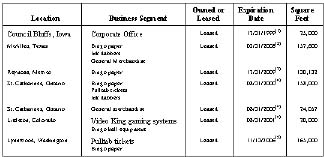
findings of suitability for Stuart, its products, and its personnel in all jurisdictions throughout the world where significant sales are anticipated to be made. However, there can be no assurance that such licenses, approvals, or findings of suitability will be obtained, that they will not be revoked, suspended, or conditioned or that they will be obtained in a timely manner. If a license, approval, or finding of suitability is required by a regulatory authority and Stuart fails to seek, does not receive the necessary approved license or finding of suitability, or the necessary license approval or finding of suitability is revoked, Stuart may be prohibited from selling its products for use in the respective jurisdiction or may be required to sell its products through other licensed entities at a reduced profit to Stuart. Employees As of December 31, 1998, Stuart and its Subsidiaries had approximately 1,740 full-time employees in the United States, Canada and Mexico. Approximately 250 employees of Stuart Entertainment Mexico are members of a union subject to a collective bargaining agreement. The collective bargaining agreement does not place any significant financial or operational burdens on Stuart. A group of approximately 300 employees in the St. Catherines, Ontario plant recently voted to organize and be represented by the United Steelworkers of America. Stuart considers relations with its employees to be good. Stuart's employee benefits include medical insurance, long-term disability insurance, and life insurance. Stuart also offers a 401(K) retirement plan to all eligible employees. Facilities Stuart's corporate offices are currently located in Council Bluffs, Iowa. Stuart intends to relocate its corporate offices to the Minneapolis/St. Paul, Minnesota area. The following table sets forth Stuart's principal properties as of the Petition Date: as a director of Stuart. | |
| |
|
Executive Guide to Corporate Bankruptcy | ||
|
| ||
|
(1) Stuart amended the lease agreement on June 30, 1998. Pursuant to this amendment, Stuart has the option to renew the lease for one additional nine month period. Stuart plans to relocate its corporate headquarters to the Minneapolis, Minnesota but may decide to keep the Council Bluffs location open for a certain period, which may require Stuart to exercise its option to renew the lease. (2) Stuart has the option to renew this lease for one additional five-year period. Stuart has rejected the lease for the McAllen, Texas facility and will vacate that facility by November 15, 1999. (3) Stuart Entertainment S.A. de C.V., Stuart's wholly-owned Mexican subsidiary, is the lessee under this lease, and Stuart is guarantor. Stuart has obtained the Bankruptcy Court's authority to assume its obligations as guarantor under the lease. (4) Stuart has the option to renew this lease for two additional five-year periods. (5) Stuart has the option to renew this lease for one additional ten-year period. | ||
|
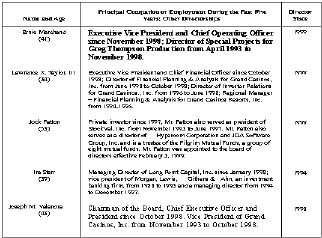
Substantially all Stuart's property and equipment are subject to liens to secure borrowings by Stuart under the DIP Facility (or other financing agreements). In general, Stuart's properties and equipment are in good condition and are considered to be adequate for their present use. Current Directors and Executive Officers Directors. The following table sets forth the name and age of each director of Stuart, his principal occupation and business experience during the past five years, and the year of commencement of his term as a director | ||
|
of Stuart. | ||
| | ||
|
|
|
Sample Plan and Disclosure Statement _ Debt to Equity Conversion |
|
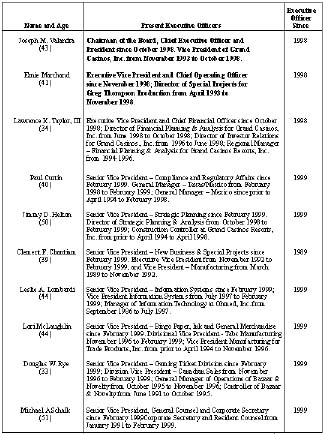
Executive Officers. The following table sets forth the name and age of each executive officer of Stuart, his principal occupation and business experience during the past five years, and the year of commencement of his term as an executive officer of Stuart. |
|
|
|
Prepetition Debt Structure The Notes On November 16, 1996, Stuart raised $100 million by issuing $100 |
|
Executive Guide to Corporate Bankruptcy | |
|
| |
|
million aggregate principal amount of 12½% Senior Subordinated Notes due November 15, 2004 (the "Notes"). The Notes were issued in a private placement in reliance upon Rule 144A under the Securities Act of 1933, as amended. Interest on the Notes is payable semi-annually in arrears on May 15 and November 15. Stuart did not make the May 15, 1999 interest payment on the Notes and approximately $9,097,221 in unpaid interest has accrued as of the Petition Date. The grace period with respect to such payment expired on June 15, 1999, thereby resulting in an "Event of Default" under the Indenture governing the terms of the Notes (the "Indenture"). HSBC Bank USA, formerly known as Marine Midland Bank, is the Indenture Trustee for the Notes. The Notes mature on November 15, 2004. The Indenture imposes certain limitations on Stuart's ability to, among other things, incur additional indebtedness, pay dividends or make certain other restricted payments, and consummate certain asset sales. Stuart used the net proceeds from the Notes (i) to repay in full existing revolving credit and term facilities, at which time such facilities were cancelled, and certain other outstanding debt instruments, and (ii) to acquire substantially all of the assets and assume certain liabilities of Trade Products, as described in the Asset Purchase Agreement, dated August 6, 1996, and amended on October 10, 1996, between Stuart, Trade Products, and Harry Poll, Ronald G. Rudy and Harry Wirth as the shareholders of Trade Products (collectively, the "Shareholders"). Stuart purchased the Assets on November 13, 1996, for a total purchase price of $37.2 million, subject to certain post-closing adjustments, plus the issuance of warrants to purchase 300,000 shares of Stuart's Old Common Stock. Neither Trade Products nor the Shareholders were affiliated with Stuart. Prepetition Working Capital Facility In November 1997, Stuart entered into a credit facility consisting of two loan and security agreements, one between Stuart and Congress Financial Corporation ("Congress") (Central) (the "U.S. Facility") and one between Bingo Press & Specialty Limited, a wholly owned subsidiary of Stuart ("Bazaar"), and Congress Financial Corporation (Canada) (the "Canadian Facility" and collectively with the U.S. Facility, the "Credit Facility"). The Credit Facility provided for maximum borrowings of up to $30 million, of which up to $20 million could be borrowed under the U.S. Facility and up to US$10 million could be borrowed under the Canadian Facility. The Credit Facility provided for a three-year term and expires in November 2000. The Credit Facility was secured by substantially all of Stuart's operating assets. The Credit Facility imposed certain covenants and other requirements on Stuart and Bazaar (the "Borrowers"), including the requirement that the Borrowers maintain a certain minimum level of net worth. As of the Petition Date, the Borrowers were not compliance with many of these covenants. The Credit Facility also contained cross-default provisions with any | |
|
|
|
Sample Plan and Disclosure Statement _ Debt to Equity Conversion |
|
other agreement, document, or instrument relating to indebtedness for borrowed money in an amount in excess of $50,000 owing to any person other than Congress. These cross-default provisions provided that, if Stuart were in default under any other applicable indebtedness, Stuart also would be in default under the Credit Facility. Accordingly, Stuart's default under the Notes was an "Event of Default" under the Credit Facility. As of the Petition Date, Stuart had not obtained a waiver of these defaults. Congress had not, however, indicated any intention to declare Stuart in default. Congress did not exercise its remedies under the Credit Facility, so the obligations outstanding under the Credit Facility were not accelerated and payable in full as of the Petition Date. Rather, Congress agreed to extend the U.S. Facility into the postpetition period to provide Stuart with interim debtor-in-possession financing in accordance with an order of the Bankruptcy Court entered on the Petition Date. In accordance with a subsequent order of the Bankruptcy Court, Stuart entered into a replacement $30 million revolving credit facility with Foothill Capital Corporation (the "Foothill Facility") for debtor-in-possession financing throughout the Chapter 11 Case. Obligations under the Foothill Facility are secured by substantially all Stuart's operating assets, with certain assets of certain of Stuart's subsidiaries provided additional borrowing base for revolving loans. Certain proceeds of the Foothill Facility were required to be used to satisfy all outstanding obligations under the Credit Facility with Congress. Simultaneously with the closing of the Foothill Facility, all Stuart's and Bazaar's obligations to Congress under the Credit Facility were satisfied in full. All obligations under the Foothill Facility are to be satisfied in accordance with Section 2.7 of the Plan. Prepetition Capital Structure General Stuart is a Delaware co |