APPENDIX E


Sample "First Day Orders"

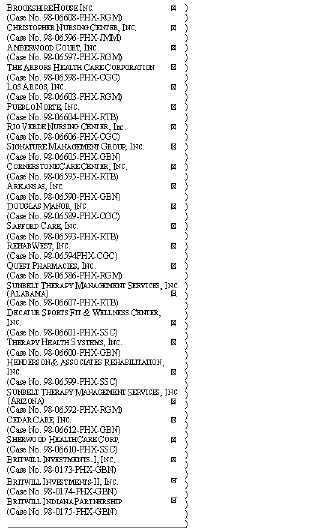
This Appendix contains some selected first day motions and First Day Orders filed in the Chapter 11 case of Unison HealthCare Corporation (involving a parent company and 32 subsidiaries and affiliates), a large bankruptcy of a nursing home provider, in May 1998. These particular first day motions involved some administrative and ministerial matters (such as the consolidation of all of the bankruptcy cases in front of one judge and having the Bankruptcy Court set the type of caption and other such logistics) to some more substantive matters (involving payment of prepetition wages and also payments of so-called "critical vendors"). Note that the first day motions were supported by an omnibus affidavit of a senior officer of the debtor, and the orders that were entered were entered as Interim Orders subject to negative notice.

In addition to the motions that are contained in this Appendix, cash collateral motions and DIP financing motions were also filed as part of the first day motions in those Chapter 11 cases. Those matters would have been addressed by separate pleadings and supporting affidavits. In some jurisdictions, each type of relief sought might be filed as a separate motion or they might be combined as a single motion (as was done in the pleadings in this Appendix from Unison HealthCare). The importance of having an accompanying affidavit of an officer of the debtor is that the Bankruptcy Court will have an evidentiary basis upon which to grant the ex parte relief being requested. The nature, scope and types of first day motions and orders that are sought in a particular case will depend upon the type of business engaged in, and also the types of relief that the bankruptcy judges presiding over the particular bankruptcy case will grant.

All of the information in this Appendix is a matter of public record on file with the United States Bankruptcy Court, so no confidences or privileges are affected by their publication.
Sample "First Day Orders"

Thomas J. Salerno, Esq.

Craig D. Hansen, Esq.

Jordan A. Kroop, Esq.

SQUIRE, SANDERS & DEMPSEY L.L.P.

40 North Central, Suite 2700

Phoenix, Arizona 85004

(602) 528-4000

Attorneys for Debtors

IN THE UNITED STATES BANKRUPTCY COURT

FOR THE DISTRICT OF ARIZONA


Executive Guide to Corporate Bankruptcy

UNISON HEALTHCARE CORPORATION, INC., a Delaware corporation ("Unison" or the "Debtor"), together with all of its wholly owned operating subsidiaries, Debtors and Debtors-In-Possession herein (collectively, the "Debtors"), by and through undersigned counsel, and pursuant to Bankruptcy Rule 1015, respectfully request that this Court enter an Order authorizing: (1) the joint administration of Debtors' estates; and (2) the utilization of a joint creditors' committee.

Three of the above captioned Debtors, Britwill Investments-I, Inc., Britwill Investments II, Inc. and Britwill Indiana Partnership (collectively, the "Britwill Entities"), filed petitions for relief under Chapter 11 or Title 11 of the United States Code (the "Bankruptcy Code") on January 7, 1998. On January 8, 1998, this Court entered an order authorizing and directing joint administration of the Britwill Entities before the Honorable George N. Nielsen. On January 28, 1998, pursuant to Sections 1102(a) and 1102(b) of the Bankruptcy Code, the Office of the United States Trustee appointed six creditors to serve as members of the Official Committee of Unsecured Creditors (the "Britwill Committee"). Shortly thereafter, the Britwill Committee retained the services of Milbank, Tweed, Hadley & mccloy


Sample "First Day Orders"

("Milbank Tweed") as counsel for the Britwill Committee. Since then, Milbank Tweed has spent a considerable amount of time reviewing and analyzing the relevant facts and issues and has been actively involved in the Britwill Entities' Chapter 11 cases.

On the petition date, Unison and substantially all of its other wholly owned subsidiaries (the "Unison Entities") filed petitions for relief under Chapter 11 of the Bankruptcy Code. The Unison Entities and the Britwill Entities are affiliates as that term is defined in Section 101(2) of the Bankruptcy Code. Specifically, all of the entities are subsidiaries of Unison, a company which is engaged in the business of providing long-term and specialty healthcare services. Accordingly, the Debtors respectfully request that the court enter an Order authorizing joint administration of the Debtors' estates before the Honorable George B. Nielsen in accordance with Bankruptcy Rule 1015, applicable herein and utilization of a joint creditors' committee in the Debtors' cases. Judge Nielsen has been presiding over the Britwill Entities' Chapter 11 cases and is familiar with much of the procedural and historical background of the Debtors' businesses.

Joint administration and utilization of a joint committee will not result in any prejudice of the creditors in these cases. In fact, utilization of a joint committee and joint administration is in the best interest of these bankruptcy estates since the issues in each of the above captioned proceedings pertain to common ownership, creditor and management interests. Furthermore, many of the motions, hearings and orders in these cases will affect each of the Debtors. In addition, the vast majority of unsecured debt in the Debtors' cases is held by the same bondholders who are listed on every individual Debtors' petition. As these bondholders are well represented on the Britwill Committee, the Britwill Committee is representative of all of the Debtors' unsecured creditors. With respect to the representation of trade creditors, those creditors currently appointed to the Britwill Committee are representative of the trade creditors holding claims against the Unison Entities. Consequently, joint administration and utilization of a joint committee will facilitate the administration process, as well as ease the burden and expense of administering these estates.

CONCLUSION AND RELIEF REQUESTED.

Debtors respectfully pray for entry of an Order authorizing joint administration of these estates before the Honorable George G. Nielsen and utilization of a joint committee, such joint committee to consist of either: (1) all of the members of the current Britwill Committee; or (2) an expanded version of the Britwill Committee, which will include all of the members of the current Britwill Committee with the addition of a few new members off of the Unison Entities' list of top twenty unsecured creditors.


Executive Guide to Corporate Bankruptcy

Respectfully submitted this 28th day of May, 1998.

Squire, Sanders & Dempsey L.L.P.

Two Renaissance Square

40 North Central Avenue, Suite 2700

Phoenix, Arizona 85004-4441

By: /s/ Thomas J. Salerno Thomas J. Salerno, Esq.

Craig D. Hansen, Esq.

Jordan A. Kroop, Esq.

Attorneys for Debtors


Sample "First Day Orders"

Thomas J. Salerno, Esq.

Craig D. Hansen, Esq.

Jordan A. Kroop, Esq.

SQUIRE, SANDERS & DEMPSEY L.L.P.

40 North Central, Suite 2700

Phoenix, Arizona 85004

(602) 528-4000

Attorneys for Debtors

IN THE UNITED STATES BANKRUPTCY COURT

FOR THE DISTRICT OF ARIZONA


Executive Guide to Corporate Bankruptcy


Sample "First Day Orders"

This matter came before the Court pursuant to the "Ex Parte Motion for Order Directing Joint Administration" (the "Motion") filed on May 28, 1998 by the Debtors.1 In light of the foregoing, and good cause appearing therefor,

it is hereby orderED, that the above captioned cases shall be, and hereby are, authorized to utilize a joint creditors committee, such joint committee to consist of either: (1) all of the members of the current Britwill Committee; or (2) an expanded version of the Britwill Committee, which will include all of the members of the current Britwill Committee with the addition of a few new members off of the Unison Entities' list of top twenty unsecured creditors.

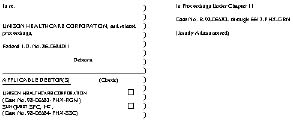
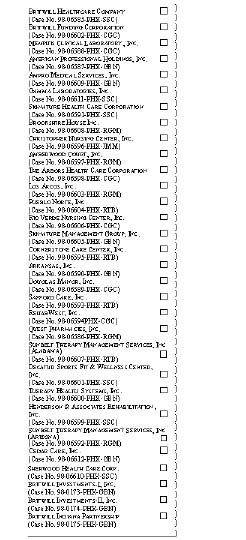
IT IS FURTHER ORDERED, that the above captioned cases shall be, and hereby are, consolidated, for procedural purposes only, and shall be administered jointly before the Honorable George B. Nielsen, Jr. (collectively the "Consolidated Cases") under the name of In re Unison Healthcare Corporation, Case Number 98-06583-PHX-GBN as set forth above and in accordance with the provisions of Rule 1015 of the Federal Rules of Bankruptcy Procedure. The caption of the consolidated cases shall read as follows:

A. If the filing relates to all Consolidated Cases:

B. If the filing relates to only a specific debtor:


1 All terms not otherwise defined herein shall have the meanings set forth in the Motion.


Executive Guide to Corporate Bankruptcy


Sample "First Day Orders"

IT IS FURTHER ORDERED, that all original docket entries shall be made on the docket of In re Unison Healthcare Corporation, Case Number 98-006583-PHX-GBN, and a docket entry shall be made on the dockets of Case Nos. 98-06583 through 98-06612 and Case Nos. 98-0173 through 98-0175 substantially as follows: "An order has been entered consolidating this case for procedural purposes only and providing for its joint administration with In re Unison Healthcare Corporation, Case No. 98-06583-PHX-GBN."

IT IS FURTHER ORDERED, that Debtors shall immediately serve this Order on the United States Trustee, the unsecured creditors' committee for the Britwill Entities, the twenty (20) largest unsecured creditors of each Unison Entity and any other party requesting special notice. Any party objecting to this Order shall do so in writing, to be timely filed with the court within twenty (20) days of service of this Order, and to be served on counsel for Debtors as follows:

Thomas J. Salerno, Esq.

Craig D. Hansen, Esq.

Jordan A. Kroop, Esq.

Squire, Sanders & Dempsey L.L.P.

40 North Central, Suite 2700

Phoenix, Arizona 85004

If no objections are timely filed, this Order shall become final.

Dated: May 28, 1998

/s/     George B. Nielsen, Jr. HON. GEORGE B. NIELSEN, JR.

CHIEF JUDGE, UNITED STATES

BANKRUPTCY COURT


Executive Guide to Corporate Bankruptcy

Thomas J. Salerno, Esq.

Craig D. Hansen, Esq.

Jordan A. Kroop, Esq.

Squire, Sanders & Dempsey L.L.P.

Two Renaissance Square

40 North Central Avenue, Suite 2700

Phoenix, Arizona 85004-4441

(602) 528-4000

Attorney for Debtors

IN THE UNITED STATES BANKRUPTCY COURT

FOR THE DISTRICT OF ARIZONA

UNISON HEALTHCARE CORPORATION, INC., a Delaware corporation, ("Unison" or the "Debtor"), together with the wholly owned operating subsidiaries indicated above (collectively, the "Debtors"), Debtors and Debtors-in-Possession herein, by and through undersigned counsel, respectfully submit this Ex Parte Motion seeking authority: (1) for maintenance of the Debtors' Bank accounts, cash management system, and business forms (the "Cash Management Protocol"); (2) to pay wages, salaries, employment taxes, employee benefit payments and workers' compensation payments (the "Payroll And Benefits Protocol"); and (3) to pay certain prepetition claims of essential vendors and supplies (the "Essential Vendor Protocol") (collectively the "First Day Motion").

This First Day Motion is supported by the accompanying Memorandum of Points and Authorities, the "Affidavit of Clayton Kloehr" filed contemporaneously herewith, and the record herein.


Sample "First Day Orders"

RESPECTFULLY SUBMITTED this 28th day of May, 1998.

Squire, Sanders & Dempsey L.L.P.

Two Renaissance Square

40 North Central Avenue, Suite 2700

Phoenix, Arizona 85004-4441

By: /s/ Thomas J. Salerno, Esq._______

Thomas J. Salerno

Craig D. Hansen, Esq.

Jordan A. Kroop, Esq.

Attorneys for Debtors


Executive Guide to Corporate Bankruptcy

MEMORANDUM OF POINTS AND AUTHORITIES

I. factual and procedural background.

1.1. Voluntary Petitions. Debtors commenced these cases on May 28, 1998 by filing voluntary petitions for relief under Chapter 11 of Title 11 of the United States Code (the "Bankruptcy Code").

1.2. Healthcare Entities. Debtors are primarily engaged in the business of providing comprehensive long-term and specialty healthcare services. The majority of Debtors' operating entities are dedicated to providing healthcare facilities (the "Healthcare Entities"). The Healthcare Entities currently operate approximately 30 skilled nursing facilities (collectively, the "Healthcare Facilities") located in Arizona, Alabama, Colorado, Indiana, Idaho, Kansas, Mississippi, Nevada, Pennsylvania, Texas, and Washington. The Healthcare Facilities contain approximately 2,579 licensed beds. Attached hereto as Exhibit "1" is a list of the 30 Healthcare Facilities operated by the Debtors.

1.3. Ancillary Entities. In addition, Debtors operate entities which act as suppliers of certain laboratory, pharmacy, and therapy services (the "Ancillary Entities"). The Ancillary Entities supply their products and services to the Debtors' Healthcare Facilities as well as to other, nonaffiliated facilities. Attached hereto as Exhibit "2" is a list of the eleven Ancillary Entities operated by the Debtors. Combined, the Healthcare Entities and the Ancillary Entities employ approximately 2,812 individuals.

1.4. Debtor-In-Possession Status. Debtors are operating their businesses and managing their assets as Debtors-in-Possession in accordance with Sections 1107 and 1108 of the Bankruptcy Code. No examiner, trustee, or unsecured creditors committee has been appointed in these cases.

1.5. Jurisdiction and Venue. This Court has jurisdiction over these cases pursuant to 28 U.S.C. § 1334. The subject matter of this Motion is a "core proceeding" pursuant to 28 U.S.C. § 157 (b)(2)(A) and (M). Venue is proper pursuant to 28 U.S.C. § 1408.

1.6. Notice. Notice of this First Day Motion has been given to the

U. S. Trustee and any additional parties listed on the official service list.

II. CASH MANAGEMENT PROTOCOL

Existing Cash Management System

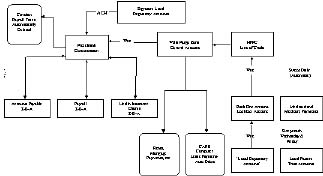
2.1. Cash Management System. The primary sources of cash collections for nursing services for all Healthcare Entities operating nursing home facilities include private pay, Medicare, Medicaid and commercial insurance revenue. The cash management function for nursing home facilities operated by the Healthcare Entities is centralized at the corporate headquarters located in Scottsdale, Arizona. Attached hereto as Exhibit "3" is


Sample "First Day Orders"

a flow chart illustrating the Debtors' current cash management system.

Individual Facility Depository Accounts

2.2. Existing Bank Accounts. Each nursing facility maintains two bank accounts: a local depository account and a patient trust account.

2.3. Local Depository Account. A bank account exists for each nursing facility at a local bank near the facility (the "Local Account"). Deposits to the Local Accounts include payments from private pay residents, commercial insurance payors, and miscellaneous revenue (vending machine revenue, etc.). Revenues generated by a number of facilities are included as part of the collateral base under a secured revolving line of credit (the "Revolving Line") provided by Healthcare Financial Partners ("HCFP") to Unison and a number of its subsidiaries. Under the terms of the Revolving Line, the Local Accounts are swept by wire transfer each Wednesday and Friday into a lockbox account (No. 11803511) maintained at Bank One Arizona.
2.4. Patient Trust Accounts. Each facility operated by a Healthcare Entity also maintains as trustee a local depository account for certain of the residents' personal funds. The Administrator and Director of Nursing of each facility are typically the authorized signers on the accounts. The facility business office manager reconciles the accounts and maintains a separate ledger for each resident. The accounts are interest bearing as required by federal regulation and the interest is allocated to each resident's balance at the end of the month. The maintenance of the patient trust accounts is done strictly at the individual facility level and the funds are not available for use by the facility or any Healthcare Entity.

Operating Accounts

2.5. Bank One Lockbox Account. In addition to the deposits made to the Local Accounts, which are swept into the Bank One lockbox (the "Lockbox") twice weekly, all Medicare and Medicaid revenues generated at each Healthcare Entity facility covered under the HCFP Revolving Line are directly deposited into the Lockbox in accordance with the terms of the Revolving Line. The Lockbox is then swept daily HCFP.

2.6. Wells Fargo General Account. Based upon availability under the Revolving Line, advances are made by HCFP into an account maintained by Unison at Wells Fargo Bank ("Wells Fargo"). The Wells Fargo

1 Signature Health Care Corporation and its subsidiaries (the "Signature Entities") are not borrowers under the Revolving Line. The nursing home facilities operated by the Signature Entities maintain separate local depository and trust accounts. Revenues generated by the facilities and deposited into the local depository accounts are then transferred to the Fleet Bank Concentration Account.


Executive Guide to Corporate Bankruptcy

account acts as a general operating account for Unison and the various Healthcare Entities. Deposits to the account include miscellaneous cash receipts from the corporate office and other related entities as well as advances from the HCFP Revolving Line. Disbursements from this account include wire transfers to the Fleet Bank concentration account to cover daily presentments, obligations to certain lease and mortgage holders, obligations to affiliate companies for intercompany advances, and various other disbursements as needed. Also, the lease payment to Care Computer, which is the provider of the accounts receivable software for all nursing facilities operated by the various Healthcare Entities, is automatically withdrawn each month.

2.7. Fleet Bank Concentration Account. The Fleet Bank concentration account's primary purpose is to automatically fund the checks presented on the controlled disbursement accounts and to fund drawdowns initiated by Ceridian Employer Services ("Ceridian"), which provides thirdparty administrative services for processing payroll for all Healthcare Entities. Payroll taxes for all nursing home facilities are withdrawn from the account one day before the pay date of each facility payroll. Amounts to be debited are determined by notifications faxed to the Unison treasury department from Ceridian, usually 23 days before the drawdown date. Deposits into this account include wire transfers from the Wells Fargo general account.

2.8. Zero Balance Accounts. Unison maintains three Zero Balance Accounts (ZBA), currently at Fleet Bank, from which it disburses payments for accounts payable, payroll, and health insurance claims for all nursing home facilities. The bank notifies Unison of check presentment totals and funding requirements by 9:15 a.m. ET through the online balance reporting system. The presentments are funded by the concentration account at Fleet Bank.

2.9. Accounts Payable. Accounts Payable for all Healthcare Entities are handled at the Scottsdale corporate office. An expenditure budget for all Healthcare Entities is compiled weekly. On a daily basis, cash requirement reports that itemize the invoices to be paid are approved for payment by the Unison treasurer or assistant treasurer before the checks are actually issued. The accounts payable department for Healthcare Entities consists of six clerks who report to the accounts payable manager. Five of the clerks are responsible for the processing of invoices for each facility within the five operating regions of Unison, while one is responsible for all home office invoices.

2.10. Payroll. The Payroll department prepares a summary of all payroll and tax liabilities by facility and date. The Unison treasury department uses the total payroll amounts to forecast check presentments for the period around the payroll date. Payroll tax amounts are used to verify that Ceridian is debiting the Fleet Bank concentration account for the correct tax amount.


Sample "First Day Orders"

The payroll department consists of six clerks who report to the payroll manager. Five of the clerks are responsible for processing the payrolls for each facility within the five operating regions, while one is responsible for processing all garnishments for all facilities.

2.11. Health Insurance Claims. Unison currently uses a third party, United HealthCare, to administer claims for partially selffunded health insurance plan for all employees of nursing facilities operated by Healthcare Entities. United HealthCare submits a cash requirement report to the Unison Human Resources department for reconciliation on a weekly basis. Once reconciled, the Treasurer will sign off on the itemized claims and United HealthCare will write checks on Unison's behalf from the Fleet Bank Health Insurance Claims account to each of the payees.

2.12. Ancillary Entities' Accounts. The Ancillary Entities maintain several local bank accounts used for all deposits and all payroll and accounts payable disbursements. Most of these accounts are integrated into the overall cash management system, with all accounts payable and payroll for certain of the Ancillary Entities being processed through an operating account. Because these Ancillary Entities supply products and services to the Debtors' healthcare facilities as well as to other, nonaffiliated facilities, the individual local bank accounts maintained by these Ancillary Entities are integrated into the overall cash management system to the extent necessary to facilitate the ongoing relationship between the Debtors and the Ancillary Entities.

MAINTENANCE OF THE CASH MANAGEMENT SYSTEM

2.13. Need for Cash Management System. It is essential to the Debtors' successful transition to DebtorsinPossession and to ensure essential services to facility residents are not disrupted that the Debtors minimize any alteration to the present cash management system until such time as the Debtors can evaluate the system and establish and implement any necessary changes in accounting procedures by which the Debtors can more accurately maintain and track cash disbursements and income for each of the Debtors' facilities. The Debtors do not believe, however, in their best business judgment, that any changes are warranted, since cash flow is adequately documented for each facility by the current system.

2.14. Cash Management Protocol Proposal. The Debtors propose the following:

(a) The Debtors will maintain the existing cash management system and continue to utilize the system during the

pendency of these cases, altering those procedures only to the extent necessary to address individual Debtor issues

that may arise.

(b) The Debtors will maintain the existing Local Accounts


Executive Guide to Corporate Bankruptcy

and local patient trust accounts as they existed prepetition without reference to the Debtors' status as

DebtorsinPossession. Debtors submit that closing the

existing Local Accounts offers no benefit to these estates while presenting Debtors with numerous undue and un necessary burdens.

(c) To the extent it becomes necessary, the Debtors will es-

tablish and implement as quickly as possible any neces-
sary account procedures to allow personnel to better track cash revenues, accounts receivables and accounts payable generated by each Debtor.
2.15. Business Forms Maintenance. The Debtors further request, in light of the complex intercompany structure of the Debtors' operations and the sheer number of facilities operated by the Healthcare Entities, that the Debtors be authorized to maintain and utilize correspondence and business forms existing prepetition without reference to their status and Debtors-in-Possession.

2.16. Benefits of Cash Management Protocol. The Debtors believe that the abovedescribed procedures will avoid interruptions of their existing business operations, will assist in a smooth and orderly post petition transition and is in the best interests of all parties in interest, including employees and creditors to these estates.

III. Payroll and benefits protocol.

Wages and Salaries

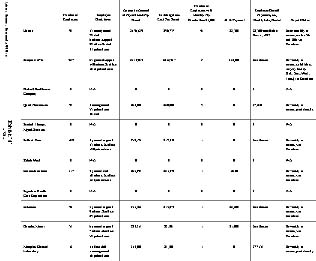
3.1. Employees. As of the petition date, the Debtors employed approximately 2,813 people. Specifically, the Healthcare Entities employed approximately 1,989 people, and the Ancillary Entities employed approximately 824 people. A table providing a complete breakdown of the number of employees employed by each Debtor entity, along with their corresponding monthly wages and benefits is attached hereto as Exhibit "4".
3.2. Third Party Administration. The Healthcare Entities utilize the services of Ceridian Employer Services ("Ceridian"), a third party administrator company, in order to perform services attendant to payroll distribution. The Healthcare Entities, through Ceridian, pay its employees on a bi-weekly basis in arrears. Thus, on each payday approximately 1,989 of the Debtors' work force receives payment for the period ending the preceding two weeks.
3.3 Healthcare Entities' Prepetition Payroll. On May 18, 20, 22, and 25, 1998, in accordance with the Healthcare Entities' customary practice, payroll checks in the amount of approximately $905,694 were distributed to the Healthcare Entities' employees. (The wages and salaries owed to the Healthcare Entities' employees referred to as the "Healthcare Enti


Sample "First Day Orders"

ties' Prepetition Payroll").

3.4. Ancillary Entities. The Ancillary Entities do not utilize the services of Ceridian, and pay their employees directly on a biweekly basis in arrears. Thus, on each payday, approximately 824 of the Debtors' work force receives payment for the period ending the preceding two weeks.

3.5. Ancillary Entities' Prepetition Payroll. On May 22 and 26, 1998, in accordance with the Ancillary Entities' customary practice, payroll checks in the amount of approximately $1,030,000 were distributed to the Ancillary Entities employees. (The wages and salaries owed to the Ancillary Entities employees referred to as the "Ancillary Entities Prepetition Payroll").

3.6. Postpetition Payroll. As the Debtors' payroll obligations are spread out over a two week time frame, the Debtors have additional payroll days arising in the immediate future. In accordance with the Healthcare Entities' customary practice, the Healthcare Entities intend to distribute, via Ceridian, payroll checks on May 29, 1998 and June 1, 5 and 8, 1998, in the aggregate amount of approximately $905,694. Similarly, in accordance with the Ancillary Entities' customary practice, the Ancillary Entities intend to distribute payroll checks on June 5 and 9, 1998, in the aggregate amount of $1,030,000. (These wages and salaries are referred to collectively as the "Debtors' Postpetition Payroll".)

3.7. Request For Authority. As discussed in Section II, above, as part of the Cash Management Protocol, Debtors are requesting authority to: (a) continue to use the unified cash management system established by Unison; (b) maintain certain prepetition bank accounts; and (c) continue to use existing business forms and checks. Absent the preceding measures, Debtors believe that payroll checks previously issued to certain employees i.e., the Healthcare Entities Prepetition Payroll and the Ancillary Entities Prepetition Payroll) may be dishonored by the banks upon which such checks were drawn due to the commencement of these proceedings and the creation of the new bank accounts. In order to ensure the payment of the individual employees, Debtors wish to maintain their current bank accounts to ensure that all Prepetition Payroll checks are honored in the ordinary course.

3.8. Honoring of Prepetition Payroll. In addition, due to potential time delays in opening the new bank accounts, Debtors believe that payroll checks to be issued in the immediate future (i.e., the Debtors' Postpetition Payroll) may be dishonored. In this regard, Debtors wish to maintain their current bank accounts to ensure that the Debtors' Postpetition Payroll checks are honored in the ordinary course.

3.9 Priority Expenses. With respect to the majority of employees receiving wages and salaries in accordance with this Motion, amounts received do not exceed the amount which such employees would be entitled


Executive Guide to Corporate Bankruptcy

to as a priority payment in accordance with Section 507(a)(3) of the Bankruptcy Code. Based upon Debtors' payroll records, approximately 271 employees out of in excess of 2,812 employees (less than 1 % of Debtors' employees) have payroll checks above the statutory limitation of $4,000. Debtors submit that such excess amount is de minimis in the context of Debtors' Chapter 11 cases.

Employment Taxes

3.10. Fleet Bank Account. Necessarily attendant to the payment of the Debtors' Pre and Postpetition Payroll is the Debtors' obligation to pay federal and state withholding taxes. Debtors' concentration account maintained at Fleet Bank (the "Fleet Bank Account") provides funds for drawdowns initiated by Ceridian to pay these employment taxes for the employees to the Healthcare Entities. The Healthcare Entities' employment taxes are withdrawn from the Fleet Bank Account one (1) day prior to the pay date of each facility payroll. Amounts to be debited are determined by notifications faxed to Ceridian, usually 23 days prior to the drawdown date. The Healthcare Entities are current on all employment taxes, and wish to maintain their current method of payment through Ceridian in the ordinary course.

3.11. Ancillary Entities' Employment Taxes. As mentioned above, the Ancillary Entities do not use a third party payroll service such as Ceridian. Instead, the Ancillary Entities distribute payroll and pay withholding taxes directly. The Ancillary Entities utilize six (6) separate banks, each local to the individual Ancillary Entity, for the purpose of distributing payroll and paying payroll taxes. A list of the banks is as follows: (a) Gilmer National Bank, Gilmer, Texas; (b) Bloomfield State Bank, Bloomfield, Indiana; (c) Austin Bank, Whitehouse, Texas; (d) Colonial Bank, Birmingham, Alabama; (e) Bank One, Dallas, Texas; and (f) Mercantile Bank, Poplar Bluff, Missouri. The Ancillary Entities are current on all employment taxes, and wish to maintain their current method of payment in the ordinary course.

3.12. Employee Benefit Payments. In the ordinary course of business and as is customary with most companies, the Debtors have established various employee benefit plans and policies that provide present and former employees with health, life, disability and retirement benefits (the "Employee Benefits"). Some of the Debtors' payments for Employee Benefits (the "Employee Benefit Payments") are made to Debtors' insurers or other third parties; others are paid directly to employees. Debtors are current on all Employee Benefit Payments, and wish to maintain their current procedures for making the Employee Benefit Payments in the ordinary course.

3.13. Workers' Compensation Payments. Debtors maintain various policies and programs for workers' compensation, as required by law. These policies and programs generally fall into two categories: (a) self-insur


Sample "First Day Orders"

ance programs where the Debtors pay workers' compensation claims with respect to their employees on a regular basis, and (b) conventional insurance where the Debtors obtain coverage from third party insurers with respect to workers' compensation. In many instances where the Debtors act as a selfinsurer, in order to comply with various state regulations, the Debtors provide the state with a bond, letter of credit or other type of assurance to secure their obligation as selfinsurers.

3.14. Related Payments. In the ordinary course of business, Debtors: (a) process and pay all workers compensation claims related to Debtors existing and former employees (including all judgements and settlements related thereto) (collectively, the "Workers' Compensation Claims") in those instances where the Debtors are selfinsurers, (b) pay all insurance premiums (the "Workers' Compensation Premiums") for insurance policies with various insurance companies with respect to workers' compensation; and (c) pay all administrative expenses (the "Workers' Compensation Administrative Expenses") associated with the maintenance of workers' compensation programs, including all expenses associated with processing of workers' compensation claims submitted, maintenance of insurance coverage, and action as is necessary to process workers' compensation claims covered by third party insurance policies.

IV. Essential vendor protocol.

4.1. Essential Vendors and Suppliers. As described above, the Debtors, through the various Healthcare Entities, currently operate approximately 30 skilled nursing facilities servicing nearly 2,600 patients. In providing such healthcare services, the Debtors maintain ongoing relationships with dozens of vendors and suppliers that provide the Debtors with the necessary goods and services required for ongoing patient care. The goods and services purchased from certain of these vendors and suppliers (the "Essential Vendors and Suppliers") are so critical to patient care that any cessation in the provision of those goods and services would not only gravely compromise the Debtors' businesses, but would also virtually preclude the Debtors from meeting daily obligations to their patients.

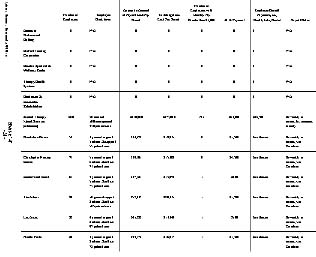
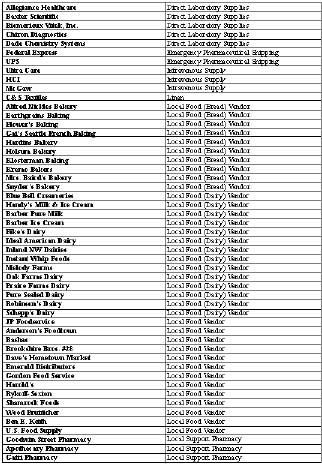
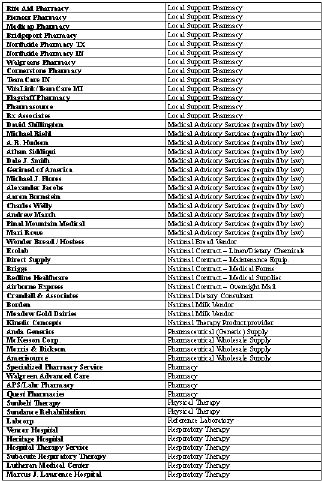
4.2. Critical Nature of Goods and Services. These Essential Vendors and Suppliers provide the Debtors with such critical goods and services as goods, pharmaceuticals, laboratory supplies, respiratory therapy, physical therapy, linens, and medical forms. Certain of these Essential Vendors and Suppliers provide medical advisory services required by state and federal law, without which the Debtor would be unable to operate their healthcare facilities in compliance with such law. In addition, one Essential Vendor provides critical dietary consultation with respect to all the Debtors' healthcare facilities throughout the country. A list of the Essential Vendors and Suppliers subject to this Motion is attached as Exhibit "5."

4.3. Need For Retention of Critical Vendors. Because these Es


Executive Guide to Corporate Bankruptcy

sential Vendors and Suppliers enable the Debtors to feed, medicate, and otherwise provide ongoing skilled nursing care to the Debtors' nearly 2,600 patients, it is essential that the Debtors retain vendors and suppliers in whom the Debtors have confidence and with whom the Debtors maintain good relations. Many such Essential Vendors and Suppliers service all the Debtors' healthcare facilities throughout the country, and it is likely that in many instances the Debtors' operations constitute a significant percentage of such Essential Vendors and Suppliers' businesses.

4.4. Competitive Arrangements with Critical Vendors. Based on their substantial experience with these Essential Vendors and Suppliers, the Debtors have confidence in the quality and reliability of their goods and services, and the Debtors believe that their contracts with them are at very competitive rates and on terms favorable to the Debtors.

4.5. Need to Avoid Compromise of Patient Care. The filing of the Debtors' petitions obviously cannot be permitted to effect ongoing services to the Debtors' patients. In light of the Debtors' critical obligations to their patients, and in light of the indispensable nature of the goods and services provided by the Essential Vendors and Suppliers, the Debtors must be able to maintain their strong relationships with such Essential Vendors and Suppliers throughout the pendency of these Chapter 11 cases. Maintaining such relationships, in fact, may be one of the most important steps during the beginning stages of these Chapter 11 cases in ensuring that the patient care is not compromised at any of the Debtors' facilities.

V. legal ARGUMENT.

1. Cash Management and Protocol.

Given the substantial size and complexity of the Debtors' operations, the prospects for a successful reorganization of the Debtors' businesses, as well as the preservation and enhancement of the Debtors' respective values as going concerns, necessarily would be threatened by any disruption in the Debtors' ordinary and usual cash management proceeds. It is essential, therefore, that the Debtors be permitted to continue to consolidate the management of their cash and transfer monies from entity to entity, as necessary and in the ordinary course of business, including the Ancillary Entities, in amounts necessary to continue the efficient operation of the Debtors' businesses.

The basic transactions incident to the cash management system described above have been utilized by the Debtors with only minor modifications for several years, and constitute ordinary, usual and essential business practices. The cash management system is similar to those commonly employed by corporate enterprises comparable to the Debtors in size and complexity. The widespread use of such systems, moreover, is attributable to the numerous benefits they provide, including the ability to tightly control corporate funds, invest idle cash, insure cash availability, and reduce


Sample "First Day Orders"

administrative expense by facilitating the movement of funds and the development of timely and accurate account balance and presentment information.

In addition, given the corporate and financial structure of the Debtors, it would be difficult, if not impossible, for the Debtors quickly and efficiently to establish a new system of accounts and a new cash management and disbursement system. For instance, the Debtors maintain their cash management system by means of a sophisticated computer system. If certain Debtors were to withdraw from this system, or if all Debtors were required to dismantle the cash management system, such Debtors would need to generate the information maintained on the central computer system and monitor and control the flow of cash manually at substantial additional costs to those Debtors' estates and creditors. Thus, under the circumstances, maintenance of the existing cash management system without disruption is not only essential, but also in the best interest of the Debtors' respective estates and creditors. Further, preserving a "business as usual" atmosphere and avoiding the unnecessary distractions that would inevitably be associated with any disruption in the Debtors' existing cash management system will facilitate the Debtors' ongoing efforts to emerge from Chapter 11 as quickly as possible.

A. The Debtors' Continued Use of their Centralized Cash Management System is Consistent with Applicable Provisions of the Bankruptcy Code.

Bankruptcy Courts routinely grant Chapter 11 debtors authority to continue utilizing existing cash management systems, treating requests for such authority as a relatively "simple matter." In re BaldwinUnited Corp., 79 B.R. 321, 327 (Bankr. S.D. Ohio 1987). This is particularly true where, as here, a Chapter 11 case involves affiliated entities with complex financial affairs. In In re The Charter Co., 778 F.2d 617, 620 (11th Cir. 1985), for example, the bankruptcy court entered an order authorizing the debtor and 43 of its subsidiaries "to continue to consolidate the management of their cash as has been usual and customary in the past and to transfer monies from affiliated entity to entity, including operating entities that are not debtors." The Court of Appeals then affirmed a subsequent District Court decision denying a creditors motion for leave to appeal the bankruptcy court's cash management order, holding that authorizing the debtors to utilize their prepetition "routine cash management system" was "entirely consistent" with applicable provisions of the Bankruptcy Code. Id. at 621.

Likewise, in another context, the Bankruptcy Court in the Columbia Gas Chapter 11 cases explained that a centralized cash management system "allows sufficient utilization of cash resources and recognizes the impracticalities of maintaining separate cash accounts for the many different purposes that require cash." In re Columbia Gas Systems. Inc., 136 B.R.


Executive Guide to Corporate Bankruptcy

930, 934 (Bankr. D. Del.) (examining validity of certain customer refund claims to funds maintained in debtors' centralized cash management system); aff'd in part and rev'd in part, 1992 U.S. Dist. LEXIS 9460 (D. Del. 1992), aff'd in part and rev'd in part, 997 F.2d 1039 (3rd Cir. 1993); cert. denied sub nom, Official Committee of Unsecured Creditors v. Columbia Gas Transmission Com., 114 S. Ct. 1050 (1994).

The continued use of case management systems employed in the ordinary course of a debtors' prepetition business has also been approved as a routine matter at the outset of many large and complex Chapter 11 cases.2

B. Use of Existing Bank Accounts and Business Forms

It is also critical that, to avoid substantial disruption to the normal operation of their businesses and to preserve a "business as usual" atmosphere, the Debtors be permitted to use their existing bank accounts and business forms. Only if these accounts and forms are maintained with the same account numbers can the Debtors accomplish a smooth transition to operations in Chapter 11.

To protect against the possible inadvertent payment of prepetition claims, all banks with which the Debtors hold accounts will be advised immediately not to honor checks issued before the Petition Date, except as otherwise ordered by this Court. The Debtors, moreover, have the capacity to distinguish clearly between pre and postpetition obligations and payments without closing existing accounts and opening new ones.

The Debtors, and their estates and creditors, would be subject to tremendous administrative burdens and expenses if they were required to close and reopen accounts and create an entirely manual system for issuing checks and paying postpetition obligations. Accordingly, in order to avoid these burdens and expenses, the Debtors request authority to continue to utilize their prepetition bank accounts and business forms under existing account numbers.

Bankruptcy Courts routinely permit debtors to utilize their existing bank accounts, finding that such relief is entirely consistent with applicable provisions of the Bankruptcy Code. See, e.g., In re New York City Shoes,


2See, e.g., In re HSSI, Inc., 176 B.R. 809 (N.D. Ill. 1995); In re Interco., Inc., 130 B.R. 301 (E.D. Mo. 1991); In re FRG, Inc., 107 B.R. 461, 465 (Bankr. S.D.N.Y. 1989); In re Family Health Services, Inc., 104 B.R. 279, 281 (Bankr. C.D. Cal. 1989), rev'd on other grounds and remanded, 143 B.R. 232 (C.D. Cal. 1992).

3 For example, the Debtors have already filed motions requesting authority to pay, in the ordinary course of their business, certain prepetition wages, salaries, employee benefits, trade claims and other similar items for or on behalf of certain employees and vendors. If the Court grants the relief requested in these motions, the Debtors will immediately notify all appropriate banks that the checks relating to such items, as identified by the Debtors on a casebycase basis, should continue to be honored.


Sample "First Day Orders"

Inc., 78 B.R. 426, 427 (Bankr. E.D. Pa. 1987); In re Grant Broadcasting, Inc., 75 B.R. 819, 820 (E.D. Pa. 1987). In addition, Bankruptcy Courts routinely grant debtors in large and complex Chapter 11 cases authority to continue using existing checks, business forms, and other similar instruments without altering such instruments to include the legend "DebtorinPossession" or a socalled "DebtorinPossession number." See, e.g., In re Johnson, 106 R.R. 623, 624 (Bankr. D. Neb. 1989) (debtors not required to obtain new checks imprinted with "Debtor-in-Possession" legend).

2. Payroll And Benefits Protocol.

The Debtors seek authority to pay, in the ordinary course of business,amounts owing as of the Petition Date and to maintain on an uninterrupted basis all policies and programs with respect to: (a) wages and salaries; (b) employment taxes; (c) employee benefit payments; and (d) Workers' Compensation Administrative Expenses.

The payment of employees is an ordinary course transaction which is vital to the Debtors continued existence and viability. Failure to allow Debtors to honor these ordinary course payroll checks would greatly hinder Debtors' ability to effectively maintain the core group of employees necessary to effectuate the Debtors' successful restructuring.

Several courts have recognized the necessity for reorganization debtors to pay prepetition claims where such payment is essential to the debtor's continued operation. See In re Ionosphere Clubs, 98 B.R. 174 (Bankr. S.D.N.Y. 1989). The Ionosphere Clubs court observed that the doctrine of necessity permits "immediate payment of claims of creditors where those creditors will not supply services or materials essential to the conduct of the business until their prereorganization claims shall have been paid." Id. at 176. The doctrine of necessity as also recognized by the Ninth Circuit Court of Appeals in In re Adams Apple, Inc., 829 F.2d 1484, 1490 (9th Cir. 1987). In Adams Apple, the Ninth Circuit espouses the concept that unequal treatment of the prepetition claims is allowed when necessary for the rehabilitation of a debtor. The court identified payments to "providers of unique and irreplaceable supplies" as being necessary, and stated that the policy of equal treatment of creditors may be superseded when it conflicts with the policy of rehabilitation of a debtors. Id. at 1490. See also In re Sharon Steel Corp., 159 B.R. 730, 737 (authorizing payment of prepetition wage claim because it was "necessary to avert a serious threat to the Chapter 11 process"); In re NVR L.P., 147 B.R. 126, 128 (Bankr. E.D. Va. 1992) (necessity of payment doctrine provides an exception to the rule prohibiting such payments where the payment is necessary to permit the effectuation of the rehabilitative purposes of the Bankruptcy Code). Courts have particularly recognized the importance of employees to the reorganization process. See In re Lehigh and New England Railway Co., 657 F.2d 570, 581 (3rd Cir. 1981) (payment of employee wages benefits all interested


Executive Guide to Corporate Bankruptcy

parties and should be approved).

It is essential to the continued operation of Debtors' healthcare facilities and to this Chapter 11 proceeding that the services of the Debtors' employees be retained and that the morale of such persons be maintained. A significant deterioration in employee morale at this critical time undoubtedly will have a substantial adverse impact on Debtors, the level of care provided to facility residents, the value of Debtors' assets and business activities, as well as any meaningful postpetition efforts to preserve and maximize value for all creditors and other parties in interest. Debtors submit that the total amount to be paid is de minimis compared to the size of these estates and the importance of these employees to a successful Chapter 11 proceeding.

Failure to pay the amounts sought herein will work substantial personal hardships on Debtors employees, and increase the Debtors' operating costs. Debtors submit that the relief herein will help maintain the continuity of the Debtors' businesses in a manner beneficial to all parties in interest and will enhance the value of the Debtors' Estates.

3. Essential Vendor Protocol.

Debtors seek authority to pay, in the ordinary course of business, amounts due to the Essential Vendors and Suppliers as of the Petition Date to the extent necessary to maintain all contracts and ongoing relationships with such Essential Vendors and Suppliers. Additionally, Debtors request that the Court's Order granting the requested relief be without prejudice to the Debtors' right to include additional essential vendors or suppliers as necessary within the Debtors' business judgment within the relief granted in the Order without additional motion to the Court, on notice to the Creditors Committee and the U.S. Trustee.

For the reasons set forth below, it is essential to the Debtors' successful reorganization and to patient care that this Court enter an order authorizing the Debtors to pay the invoices submitted by the Essential Vendors and Suppliers for prepetition goods and services delivered to the Debtors. Without the authority to pay such entities the amounts requested in this Motion, it is, in the Debtors' best business judgment, unlikely that the Essential Vendors and Suppliers will continue to provide the goods and services so essential to the Debtors' patients and ongoing maintenance of the Debtors' businesses, and the Debtors could potentially be forced into premature liquidation, with thousands of patients left without critical care. Like any other business entity, each of the Essential Vendors and Suppliers is reluctant to provide goods or services to businesses that do not pay their bills. Authorizing the Debtors to maintain strong credit relationships with these Essential Vendors and Suppliers by allowing the Debtors to pay prepetition invoices is the only way to protect the Debtors' businesses and the paramount interests of the Debtors' patients.

Furthermore, if forced to look elsewhere for such essential goods and


Sample "First Day Orders"

services, the efficient operation of the Debtors' businesses will undoubtedly be interrupted, with attendant shortcomings in patient care. In addition, such replacement contracts would likely not be on terms even reasonably as favorable to the Debtors as those in place with the Essential Vendors and Suppliers, thereby exposing the Debtors' estates and creditors to unnecessary expense. Even if such replacement contracts could be negotiated, the Debtors' inexperience with such replacement vendors and suppliers would make it difficult for the Debtors to ensure that the quality of the goods and services rendered by such replacement vendors and suppliers matches that of the Debtors' current vendors and suppliers, thus possibly exposing patients to diminished quality of care. Moreover, such replacement vendors and suppliers would inevitably charge a premium in light of the perceived risk of doing business with the Debtors during the pendency of these Chapter 11 cases. Accordingly, this Court should ensure the Debtors' ability to maintain their critical relationships with these Essential Vendors and Suppliers by authorizing the Debtors to pay their prepetition invoices.

Federal and state Medicare and Medicaid regulations also require that the Essential Vendors and Suppliers be paid on their prepetition invoices. Under such regulations, health care providers such as the Debtors must enter into provider agreements with state and federal agencies responsible for Medicaid and Medicare programs to be eligible for prospective reimbursement of "allowable costs." Under this arrangement, the various state and federal agencies implementing Medicare and Medicaid (often through private insurance companies acting as fiscal intermediaries authorized under relevant federal regulations) estimate reimbursement amounts to be paid monthly to providers based on, among other things and according to set formulae (which differ from state to state under Medicaid), the provider's actual costs for "allowable costs" for the provider's previous fiscal year. After the end of the provider's fiscal year, the provider is required to submit a "Final Cost Report" to serve as the basis for reconciliation between the actual, allowable costs incurred at the interim reimbursement payments advanced throughout that fiscal year. If interim reimbursements exceed actual costs incurred, the provider is required to remit the difference. Likewise, if interim reimbursements were less than actual costs incurred, the intermediary remits the difference to the provider. After such reconciliation, adjustments to future interim payment levels are made.

Such a system would likely present a problem for the Debtors during the pendency of these Chapter 11 cases, since the Debtors could be faced with the loss of their right to reimbursement, and since future interim payments (which essentially provide the Debtors with working capital throughout the fiscal year for operations at the individual facilities) would be reduced if prepetition invoices from the Essential Vendors and Suppliers are not paid. Medicare and Medicaid regulations provide that any invoice or debt for an


Executive Guide to Corporate Bankruptcy

allowable cost that is not liquidated (i.e., paid) within twelve (12) months becomes no longer reimbursable. Thus, if the Essential Vendors and Suppliers are not paid now in the ordinary course of business but rather are paid only a discounted pro rata distribution at the end of these cases (which, given the size and complexity of these Chapter 11 cases, is not likely to occur within the next 12 months), the Debtors will have lost their valuable right to receive reimbursement for such expenses. This would, in turn, greatly reduce the historical reimbursement levels used to determine future interim payments and result in insufficient interim payments throughout the next fiscal year, further hampering the Debtors Operation.

A. Debtors should be Authorized to Pay these Prepetition Invoices Under 11 U.S.C. § 105.

The Court may authorize the Debtors to honor their prepetition obligations to these Essential Vendors and Suppliers under Section 105(a) of the Bankruptcy Code. Because the Debtors' continued viability depends in large part on their ability to honor such obligations, it is both proper and appropriate for the Court to exercise its discretion in these cases under the authority granted to the Court under Section 105(a).

It is well established that under the "doctrine of necessity" a Bankruptcy Court may authorize the postpetition payment by a debtorinpossession of prepetition obligations where necessary to preserve or enhance the value of the estate for the benefit of its creditors. (See, e.g., Miltenberger v. Logansport Ry., 106 U.S. 286 (1882) (payment of prereceivership claim before completion of reorganization permitted to prevent "stoppage of . . . [crucial] business relations"); In re Ionosphere Clubs, 98 B.R. 174, 176 (Bankr. S.D.N.Y. 1989) (doctrine of necessity permits "immediate payment of claims of creditors where those creditors will not supply services or materials essential to the conduct of the business until their prereorganization claims shall have been paid"). The doctrine of necessity was also recognized by the Ninth Circuit Court of Appeals in In re Adams Apple, Inc., 829 F.2d 1484, 1490 (9th Cir. 1987), where the court held that unequal treatment of prepetition claims is permissible "when necessary for rehabilitation, in such context as . . . debts to providers of unique and irreplaceable supplies" and stated that the policy of equal treatment of creditors may be superseded when it conflicts with the debtor's rehabilitation. See also In re Leighy and New England Ry. Co., 657 F2d 570, 581 (3rd Cir. 1981) (doctrine of necessity permits "immediate payment of claims of creditors where those creditors will not supply services or material essential to the conduct of the business until their pre-reorganization claims shall have been paid"); In re NVR L.P., 147 B.R. 126, 128 (Bankr. E.D. Va. 1992) (necessity of payment doctrine provides an exception to the rule prohibiting payments to prepetition creditors when the payment is necessary to effectuate the rehabilitative purposes of the Bankruptcy Code).

Here, the payment of these prepetition invoices to Essential Vendors


Sample "First Day Orders"

and Suppliers is clearly appropriate under these authorities and under Section 105 of the Bankruptcy Code. As shown above, the Debtors believe in their best business judgment that the goods and services of these Essential Vendors and Suppliers will become unavailable in the postpetition period if certain invoices are not paid. In that event, the Debtors would face unreasonable delay and substantial increased costs in their ongoing businesses, concerns regarding quality and reputation, and perhaps irreversible cessation of operations, with the resulting interruption of critical patient care. Conversely, the payments of these invoices will permit the Debtors to maintain patient services at a quality level that these patients and their families have come to expect from the Debtors, and help ensure the continued business of the Debtors for the benefit of their estates and creditors.

Such invoices aggregate less than $1,800,000. Moreover, more than half of these invoices are less than 60 days old. Given what would likely be astronomical costs associated with finding replacement vendors and suppliers and the deleterious effect that nonpayment of these essential invoices would have on the Debtors' goodwill and ongoing business interests (not to mention patient care), payment of these invoices will not prejudice the Debtors' estates or creditors. In the Debtors' best judgment, such payments can only enhance Debtors' potential for reorganization and successful completion of these Chapter 11 cases.

VI. conclusion and relief requested.

For all the foregoing reasons, the Debtor respectfully requests a Court Order as follows:

A. Authorizing Debtors to maintain their currently existing Cash

Management System (including maintenance of existing bank ac-

counts, cash management systems, and business forms);

B. Authorizing Debtors to pay, in the ordinary course of business,

amounts due related to prepetition wages, salaries, employment

taxes, employee benefit payments and workers' compensation pay ments;

C. Authorizing Debtors to pay, in the ordinary course of business,

amounts due to the Essential Vendors and Suppliers on account of prepetition invoices, such Order to be without prejudice to the Debt ors' right to include additional essential vendors or suppliers as

necessary within the Debtors' business judgment within the relief granted in the Order without additional motion to the Court on

notice to the Creditors Committee and the U.S. Trustee; and

D. Granting such other and further relief as is appropriate under the
facts and circumstances of this case.
RESPECTFULLY SUBMITTED this 28th day of May, 1998.


Executive Guide to Corporate Bankruptcy

Squire, Sanders & Dempsey L.L.P.
Two Renaissance Square
40 North Central Avenue, Suite 2700
Phoenix, Arizona 85004-4441


By: /s/ Thomas J. Salerno________

Thomas J. Salerno, Esq.

Craig D. Hansen, Esq.

Jordan A. Kroop, Esq.

Attorneys for Debtors

Copy of the foregoing

sent via hand-delivery/

fax/overnight mail this

28th day of May, 1998 to

the parties on the Official

Service List

/s/ Barbara D. Clapper


Sample "First Day Orders"


Executive Guide to Corporate Bankruptcy

EXHIBIT "1"

LIST OF HEALTHCARE FACILITIES

1. Enumclaw Healthcare & Rehab 16. White Pine

2. Henry Clay Villa 17. Arkansas Manor Nursing Home

3. Oswega Manor Care Center 18. Cornerstone

4. Marshall Manor 19. Douglas Manor

5. Mountainside Care Center Inc. 20. Village Catered,

6. Mountain Vista 21. Peppertree Catered

7. Nightengale West 22. Safford Care Center

8. Oaks at Boise 23. Bonner Health Center

9. Oaks at Home Health 24. Brookshire House

10. Oaks Hospice 25. Christopher House

11. Quest Supply 26. Amberwood Court Care Center

12. Suncrest 27. Los Arcos Health Center

13. Ridgewood Care 28.Pueblo Norte Nursing Center

14. Terrace Lake Village 29. Rio Verde Nursing Center

15. Walla Walla Healthcare Center 30. The Arbors Healthcare Center


Sample "First Day Orders"

EXHIBIT "2"

LIST OF ANCILLARY ENTITIES

1. Gamma Laboratories

2. Ampro Medical Services, Inc.

3. American Professional Holdings, Inc.

4. Memphis Clinical Laboratory, Inc.

5. Quest Pharmacies, Inc. d/b/a Indiana Prescription Laboratory, and Quest Total Care Pharmacy

6. Sunbelt Therapy Management Services, Inc. (Alabama)

7. Henderson & Associates Rehabilitation, Inc.

8. Therapy Health Systems, Inc.

9. Decatur Sports Fit & Wellness Center, Inc.

10. Sunbelt Therapy Management Services, Inc. (Arizona)

11. Rehab West, Inc. d/b/a Therapy West Inc.


Executive Guide to Corporate Bankruptcy

Exhibit "3"

Cash Management System


Sample "First Day Orders"

Exhibit "4"

PAYROLL OBLIGATIONS


Executive Guide to Corporate Bankruptcy


Sample "First Day Orders"

EXHIBIT "5"

ESSENTIAL VENDORS AND SUPPLIERS


Executive Guide to Corporate Bankruptcy


Sample "First Day Orders"

Thomas J. Salerno, Esq.

Craig D. Hansen, Esq.

Jordan A. Kroop, Esq.

Squire, Sanders & Dempsey L.L.P.

Two Renaissance Square

40 North Central Avenue, Suite 2700

Phoenix, Arizona 85004-4441

(602) 528-4000

Attorney for Debtors

IN THE UNITED STATES BANKRUPTCY COURT

FOR THE DISTRICT OF ARIZONA

STATE OF ARIZONA )

) ss.

COUNTY OF MARICOPA )

I, Clayton Kloehr, having been first duly sworn upon my oath, depose and state as follows:

1. I am the Senior Vice President of Unison Healthcare Corporation ("Unison"), as well as each of the related debtors in these Chapter 11 cases (collectively, the "Debtors" or the "Companies"). I am responsible for overseeing the financial operations of the Companies. I have served in this capacity since July 1997.

2. I make this affidavit on personal knowledge in support of the following motions submitted contemporaneously with this affidavit:

(a) Ex Parte Motion for Order Approving Debtor's Maintenance of

Certain Bank Accounts, Cash Management System, and Business Forms;

(b) Ex Parte Motion for Authority to Pay Certain Prepetition Claims


Executive Guide to Corporate Bankruptcy

of Essential Vendors and Suppliers;

(c) Ex Parte Motion for Authority to Pay Wages, Salaries, Employ-

ment Taxes, Employee Benefit Payments, and Workers' Compen- sation Payments;

(d) Motion for Enlargement of Time to File Statements and Sched-

ules;*

(e) Ex Parte Motion for an Order Establishing Noticing Requirements with Respect to All Proceedings Herein;*

3. Debtors commenced these cases by filing voluntary petitions for relief under Chapter 11 of Title 11 of the United States Code (the "Bankruptcy Code").

4. Debtors are primarily engaged in the business of providing comprehensive long-term and specialty healthcare services through several operating entities (the "Healthcare Entities"). The Healthcare Entities currently operate approximately 30 skilled nursing facilities (collectively, the "Healthcare Facilities") located in Arizona, Alabama, Colorado, Indiana, Idaho, Kansas, Mississippi, Nevada, Pennsylvania, Texas and Washington. The Healthcare Facilities contain approximately 2,579 licensed beds.

5. In addition, Debtors operate entities which act as suppliers of certain laboratory, pharmacy, and therapy services (the "Ancillary Entities"). The Ancillary Entities supply their products and services to the Debtors' Healthcare Facilities as well as to other, non-affiliated facilities. Combined, the Healthcare Entities and the Ancillary Entities employ approximately 2,812 individuals.

MAINTENANCE OF CERTAIN BANK ACCOUNTS
CASH MANAGEMENT SYSTEM AND BUSINESS FORMS

Existing Cash Management System

6. The primary sources of cash collections for nursing services for all Healthcare Entities operating nursing home facilities include private pay, Medicare, Medicaid and commercial insurance revenue. The cash management function for nursing home facilities operated by the Healthcare Entities is centralized at the corporate headquarters located in Scottsdale, Arizona.

Individual Facility Depository Accounts

7. Each nursing facility maintains two bank accounts: a local depository account and a patient trust account.

8. Local Depository Account. A bank accounts exists for each nursing facility at a local bank near the facility (the "Local Account"). Deposits to


*Author's Note: Not all of the First Day Motions to which this Affidavit applied were reprinted in the Appendix.


Sample "First Day Orders"

the Local Accounts include payments from private pay residents, commercial insurance payors, and miscellaneous revenue (vending machine revenue, etc.). Revenues generated by a number of facilities are included as part of the collateral base under a secured revolving line of credit (the "Revolving Line") provided by Healthcare Financial Partners ("HCFP") to Unison and a number of its subsidiaries.1 Under the terms of the Revolving Line, the Local Accounts are swept by wire transfer each Wednesday and Friday into a lockbox account (No. 1180-3511) maintained at Bank One Arizona.

9. Patient Trust Accounts. Each facility operated by a Healthcare Entity also maintains as trustee a local depository account for certain of the residents' personal funds. The Administrator and Director of Nursing of each facility are typically the authorized signers on the accounts. The facility business office manager reconciles the accounts and maintains a separate ledger for each resident. The accounts are interest bearing as required by federal regulation and the interest is allocated to each resident's balance at the end of the month. The maintenance of the patient trust accounts is done strictly at the individual facility level and the funds are not available for use by the facility or any Healthcare Entity.

Operating Accounts

10. Bank One Lockbox Account. In addition to the deposits made to the Local Accounts, which are swept into the Bank One lockbox (the "Lockbox") twice weekly, all Medicare and Medicaid revenues generated at each Healthcare Entity facility covered under the HCFP Revolving Line are directly deposited into the Lockbox in accordance with the terms of the Revolving Line. The Lockbox is then swept daily by HCFP.

11. Wells Fargo General Account. Based upon availability under the Revolving Line, advances are made by HCFP into an account maintained by Unison at Wells Fargo Bank ("Wells Fargo"). The Wells Fargo account acts as a general operating account for Unison and the various Healthcare Entities. Deposits to the account include miscellaneous cash receipts from the corporate office and other related entities as well as advances from the HCFP Revolving Line. Disbursements from this account include wire transfers to the Fleet Bank concentration account to cover daily presentments, obligations to certain lease and mortgage holders, obligations to affiliate companies for intercompany advances, and various other disbursements as needed. Also, the lease payment to Care Compu


1 Signature Health Care Corporation and its subsidiaries (the "Signature Entities") are not borrowers under the Revolving Line. The nursing home facilities operated by the Signature Entities maintain separate local depository and trust accounts. Revenues generated by the facilities. Revenues generated by the facilities and deposited into the local depository accounts are then transferred to the First Bank Concentration Account.


Executive Guide to Corporate Bankruptcy

ter, which is the provider of the accounts receivable software for all nursing facilities operated by the various Healthcare Entities, is automatically withdrawn each month.

12. Fleet Bank Concentration Account. The Fleet Bank concentration account's primary purpose is to automatically fund the checks presented on the controlled disbursement accounts and to fund drawdowns initiated by Ceridian Employer Services ("Ceridian"), which provides third-party administrative services for processing payroll for all Healthcare Entities. Payroll taxes for all nursing home facilities are withdrawn from the account one day before the pay date of each facility payroll. Amounts to be debited are determined by notifications faxed to the Unison treasury department from Ceridian, usually 2-3 days before the drawdown date. Deposits into this account include wire transfers from the Wells Fargo general account.

13. Zero Balance Accounts. Unison maintains three Zero Balance Accounts (ZBA), currently at Fleet Bank, from which it disburses payments for accounts payable, payroll, and health insurance claims for all nursing home facilities. The bank notifies Unison of check presentment totals and funding requirements by 9:15 a.m. ET through the on-line balance reporting system. The presentments are funded by the concentration account at Fleet Bank.

14. Accounts Payable. Accounts Payable for all Healthcare Entities are handled at the Scottsdale corporate office. An expenditure budget for all Healthcare Entities is compiled weekly. On a daily basis, cash requirement reports that itemize the invoices to be paid are approved for payment by the Unison Treasurer or Assistant Treasurer before the checks are actually issued. The accounts payable department for Healthcare Entities consists of six clerks who report to the accounts payable manager. Five of the clerks are responsible for the processing of invoices for each facility within the five operating regions of Unison, while one is responsible for all home office invoices.

15. Payroll. The Payroll department prepares a summary of all payroll and tax liabilities by facility and date. The Unison treasury department uses the total payroll amounts to forecast check presentments for the period around the payroll date. Payroll tax amounts are used to verify that Ceridian is debiting the Fleet Bank concentration account for the correct tax amount. The payroll department consists of six clerks who report to the payroll manager. Five of the clerks are responsible for processing the payrolls for each facility within the five operating regions, while one is responsible for processing all garnishments for all facilities.

16. Health Insurance Claims. Unison currently uses a third party, United HealthCare, to administer claims for a partially self-funded health insurance plan for all employees of nursing facilities operated by Healthcare Entities. United HealthCare submits a cash requirement report to the Unison Human


Sample "First Day Orders"

Resources department for reconciliation on a weekly basis. Once reconciled, the Treasurer will sign off on the itemized claims and United HealthCare will write checks on Unison's behalf from the Fleet Bank Health Insurance Claims account to each of the payees.

Ancillary Entities' Accounts

17. The eleven Ancillary Entities maintain several local bank accounts used for all deposits and all payroll and accounts payable disbursements. Most of these accounts are integrated into the overall cash management system, with all accounts payable and payroll for certain of the Ancillary Entities being processed through an operating account. Because these Ancillary Entities supply products and services to the Debtors' healthcare facilities as well as to other, non-affiliated facilities, the individual local bank accounts maintained by these Ancillary Entities are integrated into the overall cash management system to the extent necessary to facilitate the ongoing relationship between the Debtors and the Ancillary Entities.

Maintenance Of The Cash Management System

18. It is essential to the Debtors' successful transition to Debtors-in-Possession and to ensure essential services to facilitate residents are not disrupted that the Debtors minimize any alteration to the present cash management system until such time as the Debtors can evaluate the system and establish and implement any necessary changes in accounting procedures by which the Debtors can more accurately maintain and track cash disbursements and income for each of the Debtors' facilities. The Debtors do not believe, however, in their best business judgment, that any changes are warranted, since cash flow is adequately documented for each facility by the current system.

19. Given the substantial size and complexity of the Debtors' operations, the prospects for a successful reorganization of the Debtors' business, as well as the preservation and enhancement of the Debtors' respective values as going concerns, necessarily would be threatened by any disruption in the Debtors' ordinary and usual cash management proceeds. It is essential, therefore, that the Debtors be permitted to continue to consolidate the management of their cash and transfer monies from entity to entity, as necessary and in the ordinary course of business in amounts necessary to continue the efficient operation of the Debtors' businesses,

20. The basic transactions incident to the cash management system described above have been utilized by the Debtors with only minor modifications for several years, and constitute ordinary, usual and essential business practices. The cash management system is similar to those commonly employed by corporate enterprises comparable to the Debtors in size and complexity. The widespread use of such systems, moreover, is attributable to the numerous benefits they provide, including the ability to tightly control corporate funds, invest idle cash, insure cash availability, and reduce


Executive Guide to Corporate Bankruptcy

administrative expense by facilitating the movement of funds and the development of timely and accurate account balance and presentment information.

21. In addition, given the corporate and financial structure of the Debtors, it would be difficult, if not impossible, for the Debtors quickly and efficiently to establish a new system of accounts and a new cash management and disbursement system. For instance, the Debtors maintain their cash management system by means of a sophisticated computer system. If certain Debtors were to withdraw from this system, or if all Debtors were required to dismantle the cash management system, such Debtors would need to generate the information maintained on the central computer system and monitor and control the flow of cash manually at substantial additional costs to those Debtors' estates and creditors. Thus, under the circumstances, maintenance of the existing cash management system without disruption is not only essential, but also in the best interest of the Debtors' respective estates and creditors. Further, preserving a "business as usual" atmosphere and avoiding the unnecessary distractions that would inevitably be associated with any disruption in the Debtors' existing cash management system will facilitate the Debtors ongoing efforts to emerge from Chapter 11 as quickly as possible.

22. It is also critical that, to avoid substantial disruption to the normal operation of their businesses and to preserve a "business as usual" atmosphere, the Debtors be permitted to use their existing bank accounts and business forms. Only if these accounts and forms are maintained with the same account numbers can the Debtors accomplish a smooth transition to operations in Chapter 11.

23. The Debtors, moreover, have the capacity to distinguish clearly between pre- and postpetition obligations and payments without closing existing accounts and opening new ones. The Debtors, and their estates and creditors, would be subject to tremendous administrative burdens and expenses if they were required to close and reopen accounts and create an entirely manual system for issuing checks and paying postpetition obligations.

PAYMENT OF CERTAIN PREPETITION

CLAIMS OF ESSENTIAL VENDORS AND SUPPLIERS

24. The Debtors, through the various Healthcare Entities, currently operate approximately 30 skilled nursing facilities servicing nearly 2,600 patients. In providing such healthcare services, the Debtors maintain ongoing relationships with dozens of vendors and suppliers that provide the Debtors with the necessary goods and services required for ongoing patient care. The goods and services purchased from certain of these vendors and suppliers (the "Essential Vendors and Suppliers") are so critical to patient care that any cessation in the provision of those goods and services would not only gravely compromise the Debtors' businesses, but would also


Sample "First Day Orders"

virtually preclude the Debtors from meeting daily obligations to their patients.

25. These Essential Vendors and Suppliers provide the Debtors with such critical goods and services as food, pharmaceuticals, respiratory therapy, physical therapy, linens, and medical forms. Certain of these Essential Vendors and Suppliers provide medical advisory services required by state and federal law, without which the Debtor would be unable to operate their healthcare facilities in compliance with such law. In addition, one Essential Vendor provides critical dietary consultation with respect to all the Debtors' healthcare facilities throughout the country.

26. Because these Essential Vendors and Suppliers enable the Debtors to feed, medicate, and otherwise provide ongoing skilled nursing care to the Debtors' nearly 2,600 patients, it is essential that the Debtors retain vendors and suppliers in whom the Debtors have confidence and with whom the Debtors maintain good relations. Many such Essential Vendors and Suppliers service all the Debtors' healthcare facilities through the country, and it is likely that in many instances the Debtors' operations constitute a significant percentage of such Essential Vendors and Suppliers businesses.

27. Based on their substantial experience with these Essential Vendors and Suppliers, the Debtors have confidence in the quality and reliability of their goods and services, and the Debtors believe that their contracts with them are at very competitive rates and on terms favorable to the Debtors.

28. The filing of the Debtors' petitions obviously cannot be permitted to effect ongoing services to the Debtors' patients. In light of the Debtors' critical obligations to their patients, and in light of the indispensable nature of the goods and services provided by the Essential Vendors and Suppliers, the Debtors must be able to maintain their strong relationships with such Essential Vendors and Suppliers throughout the pendency of these Chapter 11 cases. Maintaining such relationships, in fact, maybe one of the most important steps during the beginning stages of these Chapter 11 cases in ensuring that patient care is not compromised at any of the Debtors' facilities.

29. Without paying such entities, it is, in the Debtors' best business judgment, unlikely that the Essential Vendors and Suppliers will continue to provide the goods and services so essential to the Debtors' patients and ongoing maintenance of the Debtors' businesses, and the Debtors could potentially be forced into premature liquidation, without thousands of patients left without critical care. Like any other business entity, each of the Essential Vendors and Suppliers is reluctant to provide goods or services to businesses that do not pay their bills. Authorizing the Debtors to maintain strong credit relationships with these Essential Vendors and Suppliers by allowing the Debtors to pay prepetition invoices is the only way to protect the Debtors' businesses and the paramount interests of the Debtors' patients.


Executive Guide to Corporate Bankruptcy

30. Furthermore, if forced to look elsewhere for such essential goods and services, the efficient operation of the Debtors' businesses will undoubtedly be interrupted, with attendant shortcomings in patient care. In addition, such replacement contracts would likely not be on terms even reasonably as favorable to the Debtors as those in place with the Essential Vendors and Suppliers, thereby exposing the Debtors' estates and creditors to unnecessary expense. Even if such replacement contracts could be negotiated, the Debtors' inexperience with such replacement vendors and suppliers would make it difficult for the Debtors to ensure that the quality of the goods and services rendered by such replacement vendors and suppliers matches that of the Debtors' current vendors and suppliers, thus possibly exposing patients to diminished quality of care. Moreover, such replacement vendors and suppliers would inevitably charge a premium in light of the perceived risk of doing business with the Debtors during the pendency of these Chapter 11 cases.

31. Federal and state Medicare and Medicaid regulations also require that the Essential Vendors and Suppliers be paid on their prepetition invoices. Under such regulations, health care providers such as the Debtors must enter into provider agreements with state and federal agencies responsible for Medicaid and Medicare programs to be eligible for prospective reimbursement of "allowable costs." Under this arrangement, the various state and federal agencies implementing Medicare and Medicaid (often through private insurance companies acting as fiscal intermediaries authorized under relevant federal regulations) estimate reimbursement amounts to be paid monthly to providers based on, among other things and according to set formulae (which differ from state to state under Medicaid), the provider's actual costs for "allowable costs"2 for the provider's previous fiscal year. After the end of the provider's fiscal year, the provider is required to submit a "Final Cost Report" to serve as the basis for reconciliation between the actual, allowable costs incurred at the interim reimbursement payments advanced through the fiscal year. If interim reimbursements exceed actual costs incurred, the provider is required to remit the difference. Likewise, if interim reimbursements were less than actual costs incurred, the intermediary remits the difference to the provider. After such reconciliation, adjustments to future interim payment levels are made.

32. Such a system would likely present a problem for the Debtors during the pendency of these Chapter 11 cases, since the Debtors could be faced with the loss of their right to reimbursement, and since future interim


2 Virtually all expenditures for goods and services at each of the Debtors' facilities fall within the bounds of "allowable costs," and all goods and services supplied by the Essential Vendors and Suppliers and reflected in the invoices sought to be paid under authority from this Motion, are "allowable costs" under Medicaid and Medicare.


Sample "First Day Orders"

payments (which essentially provide the Debtors with working capital throughout the fiscal year for operations at the individual facilities) would be reduced if prepetition invoices from the Essential Vendors and Suppliers are not paid. Medicare and Medicaid regulations provide that any invoice or debt for an allowable cost that is not liquidated (i.e., paid) within twelve (12) months becomes no longer reimbursable. Thus, if the Essential Vendors and Suppliers are not paid now in the ordinary course of business but rather are paid only a discounted pro rata distribution at the end of these cases (which, given the size and complexity of these Chapter 11 cases, is not likely to occur within the next 12 months), the Debtors will have lost their valuable right to receive reimbursement for such expenses. This would, in turn, greatly reduce the historical reimbursement levels used to determine future interim payments and result in insufficient interim payments throughout the next fiscal year, further hampering the Debtors' operations.

PAYMENT OF WAGES, SALARIES, EMPLOYMENT TAXES,

EMPLOYEE BENEFITS AND WORKERS COMPENSATION

Wages and Salaries

33. As of the Petition Date, the Debtors employed approximately 2,813 people. Specifically, the Healthcare Entities employed approximately 1,989 people, and the Ancillary Entities employed approximately 824 people.

34. The Healthcare Entities utilize the services of Ceridian Employer Services ("Ceridian"), a third party administrator company, in order to perform services attendant to payroll distribution.

35. The Healthcare Entities, through Ceridian, pay its employees on a bi-weekly basis in arrears. Thus, on each payday, approximately 1,989 of the Debtors' work force receives payment for the period ending the preceding two weeks.

36. On May 18, 20, 22, and 25, 1998, in accordance with the Healthcare Entities' customary practice, payroll checks in the amount of approximately $905,694 were distributed to the Healthcare Entities' employees. (The wages and salaries owed to the Healthcare Entities' employees referred to as the "Healthcare Entities' Prepetition Payroll").

37. The Ancillary Entities do not utilize the services of Ceridian, and pay their employees directly on a bi-weekly basis in arrears. Thus, on each payday, approximately 824 of the Debtors' work force receives payment for the period ending the preceding two weeks.

38. On May 22 and 26, 1998, in accordance with the Ancillary Entities' customary practice, payroll checks in the amount of approximately $1,030,000 were distributed to the Ancillary Entities employees. (The wages and salaries owed to the Ancillary Entities employees referred to as the "Ancillary Entities Prepetition Payroll").


Executive Guide to Corporate Bankruptcy

39. As the Debtors' payroll obligations are spread out over a two week time frame, the Debtors have additional payroll days arising in the immediate future. In accordance with the Healthcare Entities' customary practice, the Healthcare Entities intend to distribute, via Ceridian, payroll checks on May 29, 1998, and June 1, 5 and 8, 1998, in the aggregate amount of approximately $905,694. Similarly, in accordance with the Ancillary entities' customary practice, the Ancillary Entities intend to distribute payroll checks on June 5 and 9, 1998, in the aggregate amount of $1,030,000. (These wages and salaries are referred to collectively as the "Debtors' Postpetition Payroll.")

40. As discussed above, Debtors are requesting authority to continue to participate in the unified cash management system established by Unison Healthcare Corporation and maintain certain prepetition bank accounts. Absent these measures, Debtors believe that payroll checks previously issued to certain employees, i.e., the Healthcare Entities Prepetition Payroll and the Ancillary Entities Prepetition Payroll, may be dishonored by the banks upon which such checks were drawn due to the commencement of these proceedings.

Employment Taxes

41. Necessarily attendant to the payment of the Debtors' Pre and Postpetition Payroll is the Debtors' obligation to pay federal and state withholding taxes. Debtors' concentration account maintained at Fleet Bank (the "Fleet Bank Account") provides funds for drawdowns initiated by Ceridian to pay these employment taxes for the employees of the Healthcare Entities. The Healthcare Entities' employment taxes are withdrawn from the Fleet Bank Account 1 day prior to the pay date of each facility payroll. Amounts to be debited are determined by notifications faxed to Ceridian, usually 22 days prior to the drawdown date. The Healthcare Entities are current on all employment taxes, and with to maintain their current method of payment through Ceridian in the ordinary course.

42. As mentioned above, the Ancillary Entities do not use a third party payroll service such as Ceridian, and instead, they distribute payroll and pay withholding taxes directly. The Ancillary Entities utilize five separate banks, each local to the individual Ancillary Entity, for the purpose of distributing payroll and paying payroll taxes. A list of the banks is as follows: (1) Gilmer National Bank, Gilmer, Texas; (2) Bloomfield State Bank, Bloomfield, Indiana; (3) Austin Bank, Whitehouse, Texas; (4) Colonial Bank, Birmingham, Alabama; (5) Bank One, Dallas, Texas; and (6) Mercantile Bank, Poplar Bluff, Missouri. The Ancillary Entities are current on all employment taxes, and wish to maintain their current method of payment in the ordinary course.

Employee Benefit Payments

43. In the ordinary course of business and as is customary with most


Sample "First Day Orders"

companies, the Debtors have established various employee benefit plans and policies that provide present and former employees with health, life, disability and retirement benefits (the "Employee Benefits"). Some of the Debtors' payments for Employee Benefits (the "Employee Benefit Payments") are made to Debtors' insurers or other third parties; others are paid directly to employees. Debtors are current on all Employee Benefit Payments, and wish to maintain their current procedures for making the Employee Benefit Payments in the ordinary course.

Workers' Compensation Payments

44. Debtors maintain various policies and programs for workers' compensation, as required by law. These policies and programs generally fall into two categories: (i) self-insurance programs where the Debtors pay workers' compensation claims with respect to their employees on a regular basis, and (ii) conventional insurance where the Debtors obtain coverage from third party insurers with respect to workers' compensation. In many instances where the Debtors act as a self-insurer, in order to comply with various state regulations, the Debtors provide the state with a bond, letter of credit or other type of assurance to secure their obligation as self-insurers.

45. In the ordinary course of business, Debtors (i) process and pay all workers compensation claims related to Debtors existing and former employees (including all judgements and settlements related thereto) (collectively, the "Workers' Compensation Claims") in those instances where the Debtors are self-insurers, (ii) pay all insurance premiums (the "Workers' Compensation Premiums") for insurance policies with various insurance companies with respect to workers' compensation; and (iii) pay all administrative expenses (the "Workers' Compensation Administrative Expenses") associated with the maintenance of workers' compensation programs, including all expenses associated with processing of workers' compensation claims submitted, maintenance of insurance coverage, and such action as is necessary to process workers' compensation claims covered by third party insurance policies.

It is essential to the continued operation of Debtors' healthcare facilities and this Chapter 11 proceeding that the services of the Debtors' employees be retained and that the morale of such persons be maintained. A significant deterioration in employee morale at this critical time undoubtedly will have a substantial adverse impact on Debtors, the level of care provided to facility residents, the value of Debtors' assets and business activities, as well as any meaningful post-petition efforts to preserve and maximize value for all creditors and other parties in interest. The total amount to be paid is de minimis compared to the size of these estates and the importance of these employees to a successful Chapter 11 proceeding.

Failure to pay the amounts sought herein will work substantial personal


Executive Guide to Corporate Bankruptcy

hardships on Debtors employees, and increase the Debtors' operating costs. The relief herein will help maintain the continuity of the Debtors' businesses in a manner beneficial to all parties in interest and will enhance the value of the Debtors' Estates.

ENLARGEMENT OF TIME TO

FILE STATEMENTS AND SCHEDULES

46. Under the unified cash management system of the Debtors, Unison (the parent company), is responsible for all business office services for the Debtors, including, billing and accounts receivable management, accounts payable, accounting and finance, quality assurance, and regulatory compliance at each facility. All of these services are performed at the corporate offices of Unison, located in Scottsdale, Arizona. Due to this unified cash management program, a great deal of time and effort is required to separate and prepare the Statements and Schedules for each Debtor.

47. Additionally, the Debtors have been required to devote a significant amount o time and effort in connection with, inter alia, cash collateral matters and other proceedings which have interfered with Debtors' ability to compile and analyze the information needed to complete the Statements and Schedules by June 12, 1998.

Dated this 28th day of May, 1998.

/s/ Clayton Kloehr___ CLAYTON KLOEHR

SUBSCRIBED AND SWORN to before me this 28th day of May, 1998.

/s/ Barbara D. Clapper Notary Public

My Commission Expires:

June 13, 2000_________


Sample "First Day Orders"

IN THE UNITED STATES BANKRUPTCY COURT

FOR THE DISTRICT OF ARIZONA

This matter came before the Court pursuant to the "Ex Parte Motion For Authority To: (1) Maintain Debtors' Existing Accounts, Cash Management System And Business Forms; (2) Pay Wages, Salaries, Employment Taxes, Employee Benefits And Workers' Compensation Payments; And (3) Pay Certain Prepetition Claims Of Essential Vendors And Suppliers" (the Motion"), filed by the debtors and debtors-in-possession identified above (collectively, "Debtors") on May 28, 1998. In light of the foregoing, and good cause appearing therefor,

THE COURT FINDS as follows:

1. This Court has jurisdiction over the Motion pursuant to 28 U.S.C. §§ 157 and 1334. The Motion presents a "core" proceeding with respect to which the Court may enter a binding Order pursuant to 28 U.S.C. § 157(b). The Motion may be granted under the statutory predicates within 11 U.S.C. §§ 105, 1107 and 1108.

2. This Court has authority to grant relief on an ex parte basis without general notice to creditors under 11 U.S.C. §§ 105(a) and 102(1), and Bankruptcy Rule 9006, and based upon the immediacy of the Motion.

3. This Court may grant the Motion to preserve Debtors' going concern values and normal business relationships. In granting this Motion, the Court considered the broad aims and purposes of the U .S. Trustee's Operating Guidelines, and has determined that for the limited purposes of this case, the estates and interested parties can be better served by the conservation of Debtors' already scarce financial resources.

4. The granting of the Motion as to payments of prepetition essential vendors and suppliers will enhance the Debtors' ability to efficiently operate their businesses and will benefit the interests of the Debtors' estates and creditors.

ACCORDINGLY, IT IS HEREBY ORDERED as follows:

A. The Motion shall be, and hereby is, GRANTED;


Executive Guide to Corporate Bankruptcy

B. The Debtors are hereby authorized to continue to participate in the unified cash management system as described in the Motion;

C. The Debtors are hereby authorized to maintain certain prepetition bank accounts identified in the Motion as Local Accounts* and Patient Trust accounts;

D. The Debtors are hereby authorized to continue to utilize correspondence and business forms existing as of the Petition Date for each facility operated by the Debtors without reference to their status as debtors-in-possession;

E. The Debtors are hereby authorized to pay, in the ordinary course of business, amounts due related to prepetition wages, salaries, employment taxes, employee benefits and workers' compensation payments;

F. The Debtors are hereby authorized to pay, in the ordinary course of business, those prepetition claims asserted by the Essential Vendors and Suppliers for good sand services provided to the Debtors in the ordinary course of the Debtors' businesses;

G. The Debtors may include additional essential vendors or suppliers as necessary within Debtors' business judgment within the relief granted in this Order without additional motion to this Court, on notice to the Creditors Committee and the U .S. Trustee.

H. The Debtors shall immediately serve this Order on the United States Trustee, the twenty (20) largest unsecured creditors of each Debtor, and any other party specifically affected by the relief granted herein. Any party objecting to this Order shall do so in writing, to be timely filed with the Court within twenty (20) days of service of this Order, and to be served on counsel for Debtors as follows:

Thomas J. Salerno, Esq.

Craig D. Hansen, Esq.

Jordan A. Kroop, Esq.

SQUIRE, SANDERS & DEMPSEY L.L.P.

2600 North Central Avenue

Phoenix, Arizona 85004

If no objections are timely filed, this Order shall become final.

DATED: May 28, 1998

/s/ George B. Nielsen, Jr._________ HON. GEORGE B. NIELSEN, JR.

CHIEF JUDGE UNITED STATES BANKRUPTCY COURT


*All capitalized terms not otherwise defined herein shall have the meanings set forth in the Motion.